

Buyer's Guide: How to Evaluate Contractor Management Platforms in 2026
Move beyond legacy AP tools and discover how modern platforms automate compliance, accelerate onboarding, and unlock the full potential of your contingent workforce.
Why you need a comprehensive contractor management platform
Traditional accounts payable and payroll solutions aren’t built with contractors in mind.
This leaves accounting teams two options to manage your contractors, and neither of them quite work. You have:
Stitching these systems together just makes everything more difficult for your internal team, slowing them down with manual, time-consuming work—and keeping your contractors from getting paid on time. Don’t let something as important as this come down to whether your team keeps a spreadsheet up-to-date.
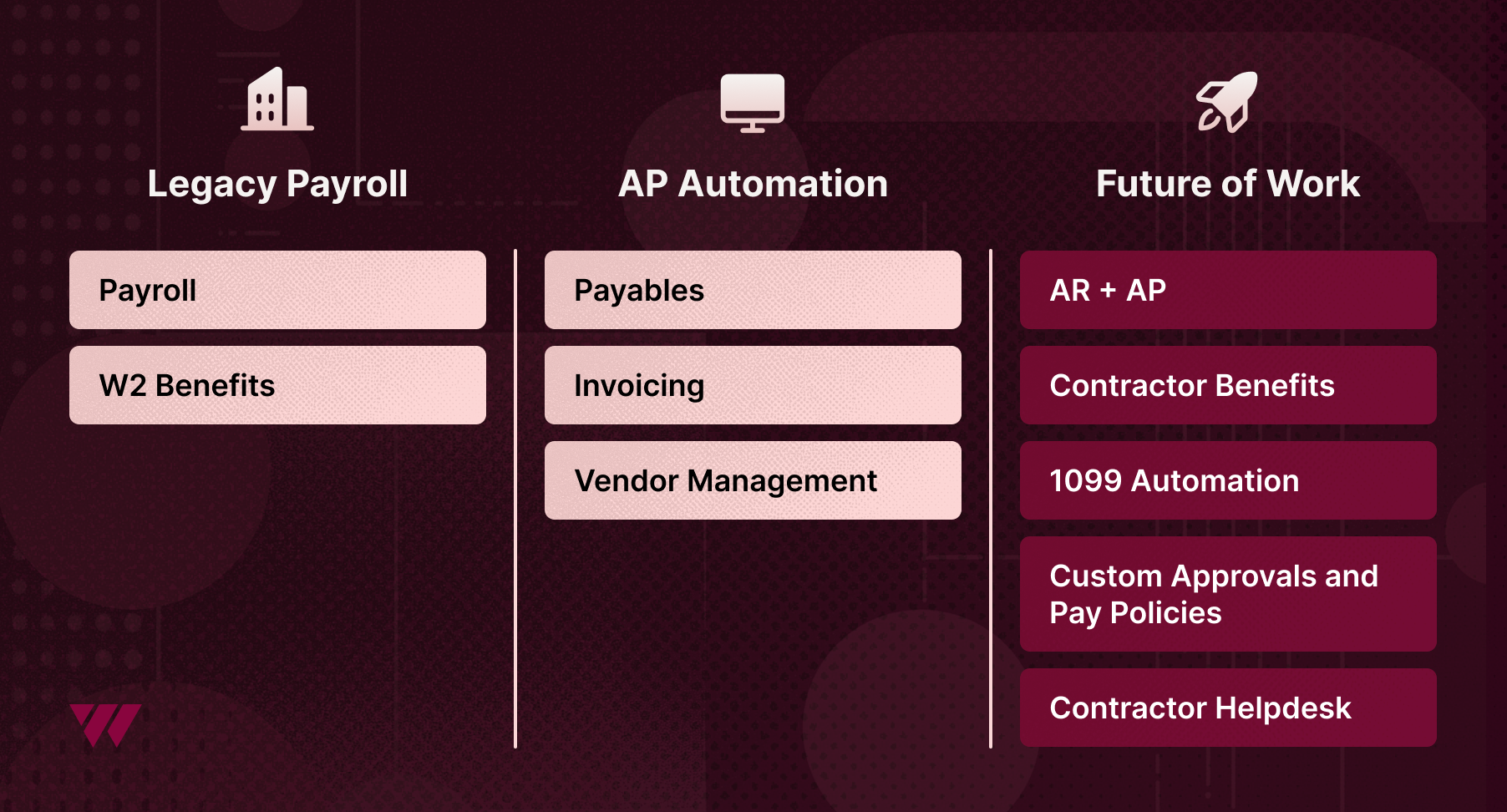
These systems don’t talk to one another, and even with both, you still end up missing important functions with your contractors, like verifying their TIN or licensing information before they start a project.
Contractor management requires a separate set of capabilities that are patched over with human intervention. From the signed contract to custom policies, there’s a long checklist of items that accounting and finance teams need to make sure contractors get paid—and get their work done.
For W2 employees, payroll happens on a regular basis, usually every two weeks. For salaried employees, that’s automatic, whether they use a sick day or spend all night tinkering with a presentation. For your hourly employees, as long as they punch in, they get paid.
For contractors, things work a little differently. They may work forty hours one week and ten the next. They may take a month off and then re-join the project later. They may not work hourly at all, setting prices based on projects completed, forcing your contractor (or your team) to do some back-of-the-napkin math just to work with the system.
That makes it impossible to move fast and capitalize on surges in customer demand by adding more contractors. Or to move people around quickly when things wrap up seasonally. It may be possible to do it with one or two contractors, but if you’ve got a team your business depends on, it’s just a big headache waiting to happen.
What’s more, payroll is only part of the picture with your contractors. With Wingspan, you can eliminate manual payment processes like adding funds or notifying your contractors about payment. Instead of double checking a complicated spreadsheet, create recurring invoices that automatically go into your system each month. Instead of fielding pings and calls from disgruntled contractors about getting paid, it all happens with one click.
The biggest misconception about managing contractors? If they’re a 1099 employee, then all you have to do is pay them the way you would a vendor.
That’s not how the IRS thinks about your 1099 employees.
This creates a mad scramble come January, when accounting teams—already rushing around trying to finish close-of-business tasks—have to pull together information from multiple sources and turn around a 1099 by January 31st or risk heavy fines from the IRS. This administrative chaos means your team is running around in circles sending and fixing 1099s to contractors instead of focusing on day-to-day tasks.
Wingspan makes it easy not just to pay contractors, but to handle the 1099 process, too. That starts with an onboarding process where you can request W-9s and cross-check TINs with the IRS database, preventing payment until you receive that information. From there, Wingspan can auto-calculate payment totals from past transactions, integrated with financial tools to pull imported payments data. Once your 1099-NEC forms are ready, Wingspan delivers them directly to contractors and e-files the documents with the IRS and state agencies.
Trying to juggle two or three different systems that refuse to talk to one another while handling sensitive data like banking details or TINs creates opportunities for errors no matter how detail-oriented your accounting team is. Multiply that by a hundred or more contractors and you’ve got a tangled mess.
What you need is a system that can manage every aspect of the contractor lifecycle:
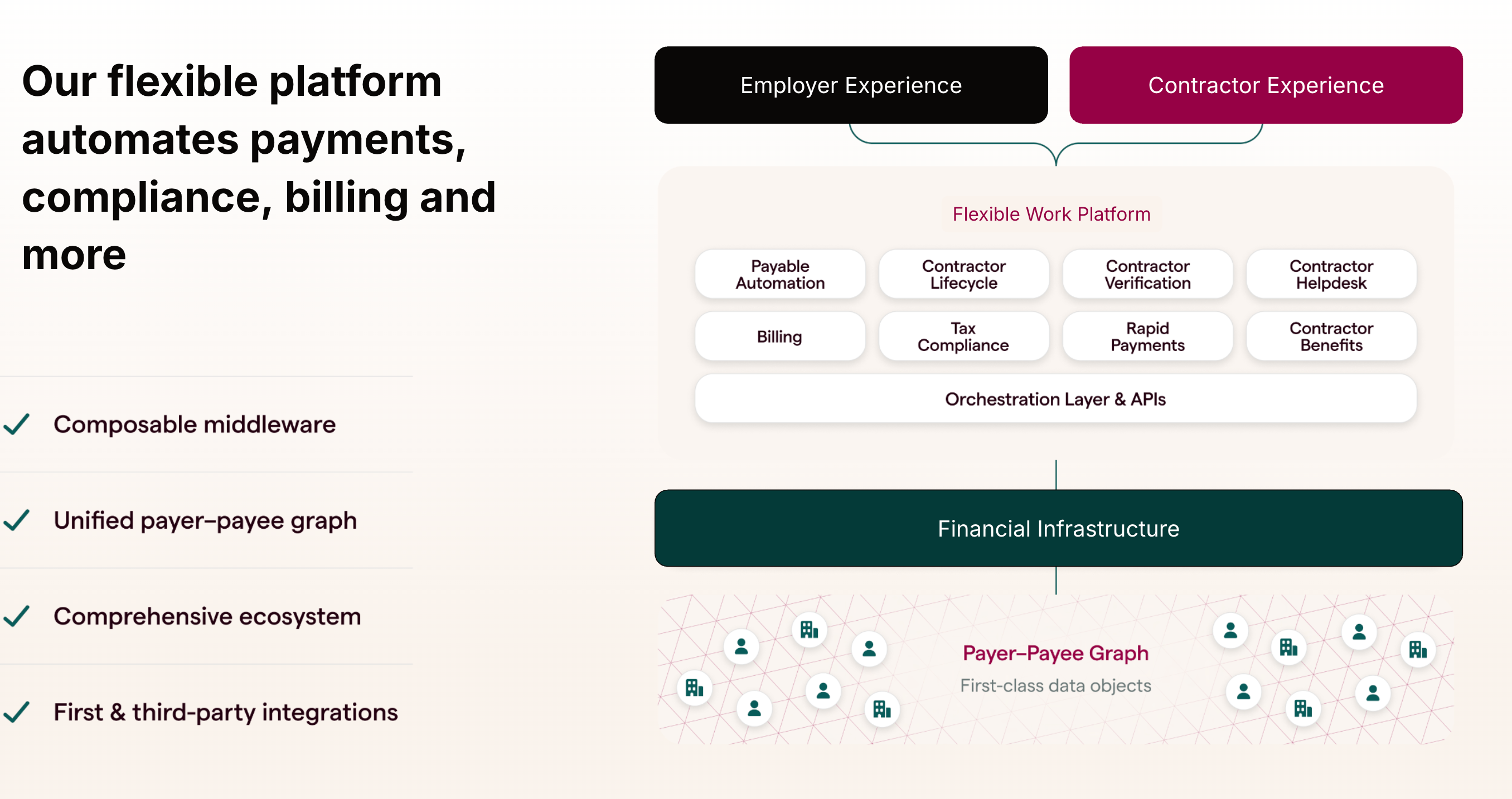
Wingspan can automate, standardize, and offer self-service for your entire contractor lifecycle so you can stop stitching together multiple systems and start crushing the rest of your (very long) to-do list. See how a full contractor management system can make your life easier >
Move beyond legacy AP tools and discover how modern platforms automate compliance, accelerate onboarding, and unlock the full potential of your contingent workforce.

The Rise of 1099 Provider Networks in Behavioral Health—and How to Manage Them

Why you need a comprehensive contractor management platform