Operations
Onboarding, capacity planning, contractor support, and experience at scale.
2026 Report
New data from 500+ Finance, HR, and Operations leaders shows how contractors are reshaping the workforce, and where most companies still have a gap to close.
of businesses say contractors now do work once reserved for employees.
Highly skilled contractors are doing core, billable work.
What's inside
Who this is for
Managing contractors is spread across Finance, HR, and Operations at once. That is exactly why most leadership teams underestimate its true cost. This report is for the people who own the work.
Onboarding, capacity planning, contractor support, and experience at scale.
Payments, reconciliation, spend visibility, and 1099 readiness.
Classification, onboarding, documentation, and retention.
Closing the visibility gap between the C-suite and the teams doing the work.
Industry benchmarks
Each report breaks down onboarding, payment, compliance, and support benchmarks for a specific contractor-heavy industry.
Key findings
The gig economy narrative has long overshadowed a bigger shift in the workforce. Highly skilled independent contractors do more than fill gaps. They drive revenue.
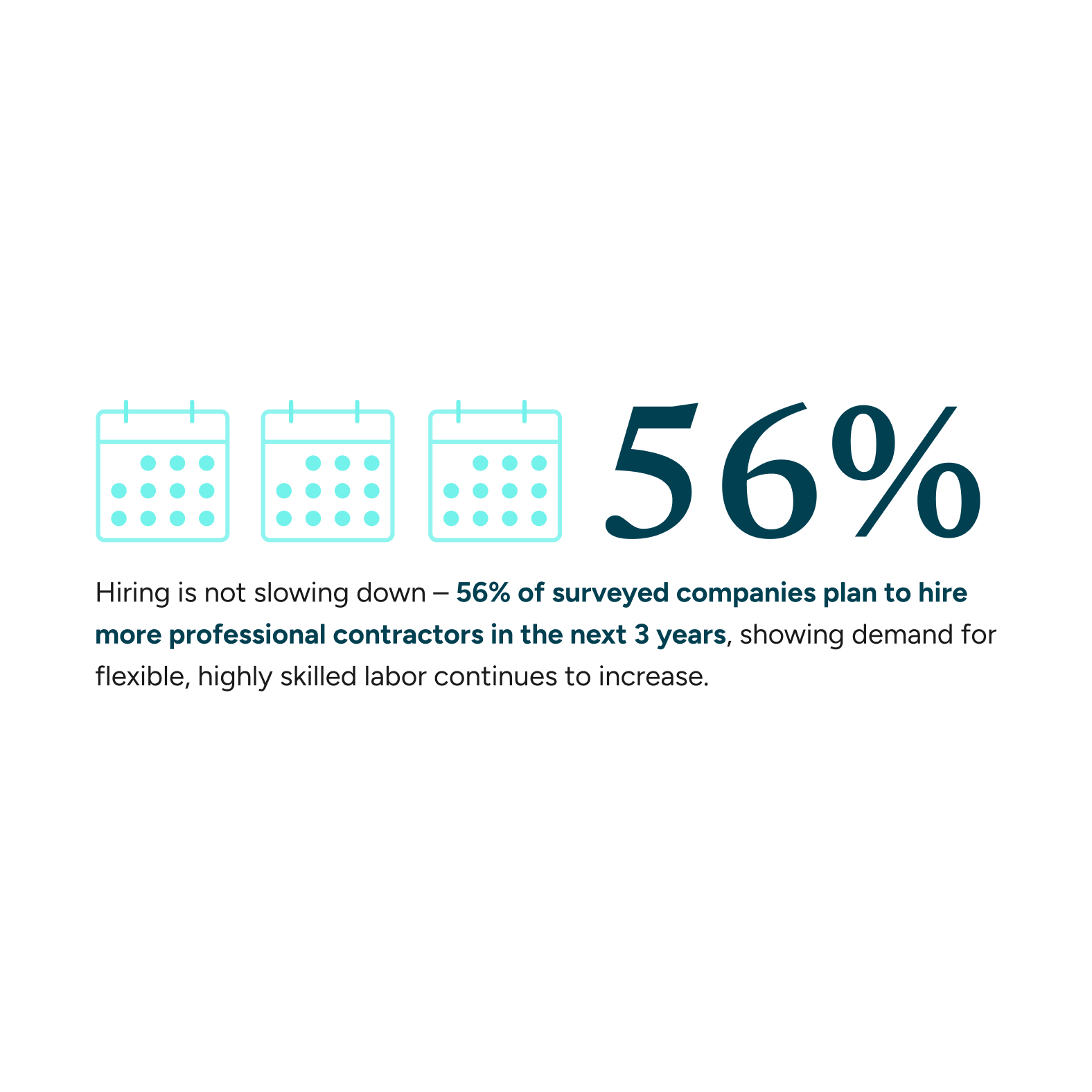
Independent contractors, particularly in healthcare, professional services, and insurance, are core contributors. They deliver billable work and specialized expertise that companies can't hire fast enough. With 56% of companies planning to grow their contractor workforce in the next three years, the infrastructure you choose today decides whether that growth runs smoothly or stalls.
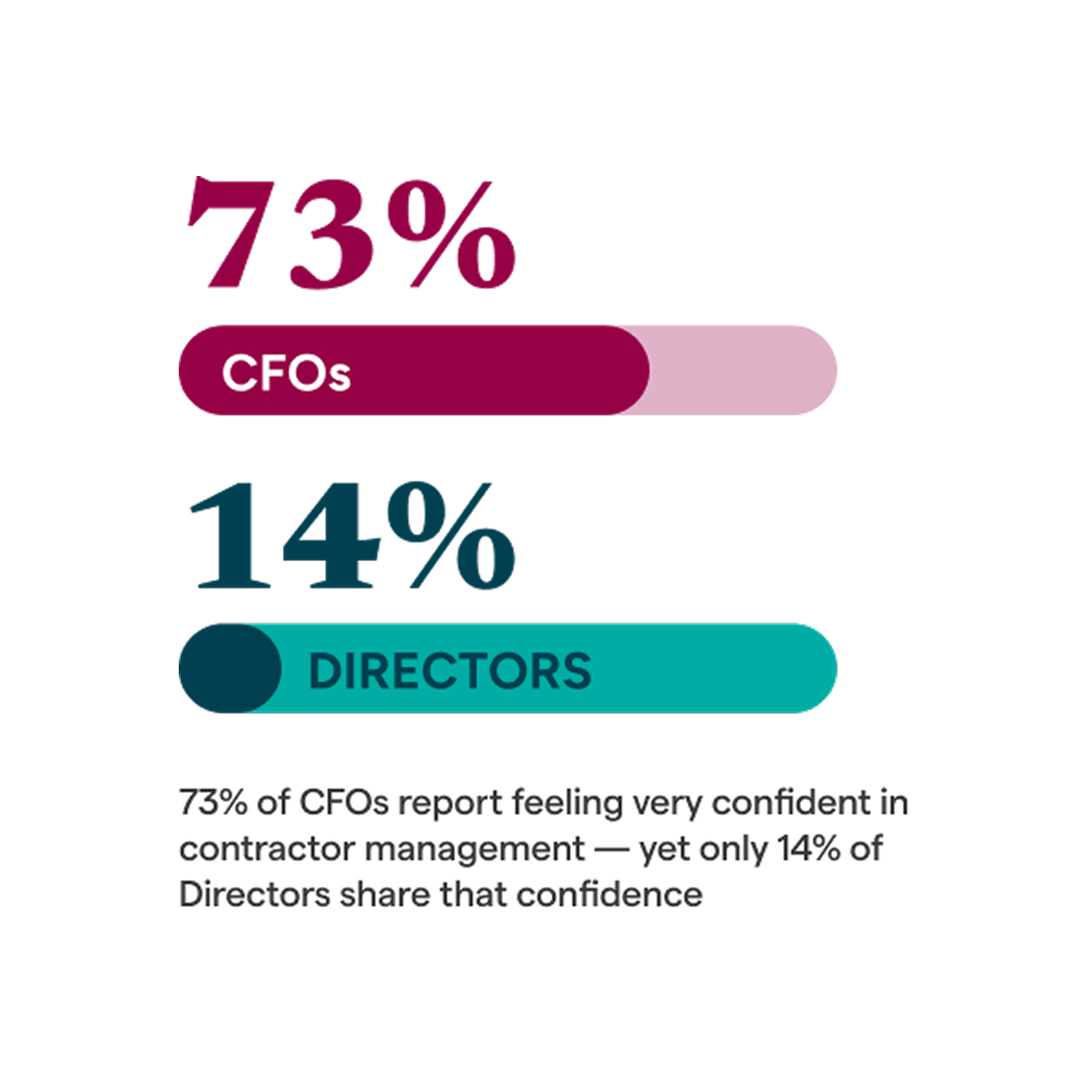
When contractor management breaks down, it rarely surfaces at the top of the org chart. It gets absorbed by the Directors and Managers closest to the work. That gap between executive confidence and ground-level reality is one of the most striking findings in the data.
Operations teams are twice as likely as any other department to exceed 81 hours per month on contractor-related work. Because the burden is spread across Finance, HR, and Operations at once, most leadership teams underestimate the true cost to the business.
High-demand contractors can choose who they work with. For them, payment delays and onboarding confusion are dealbreakers. Since 84% of contractors do billable work, churn is a direct threat to revenue.
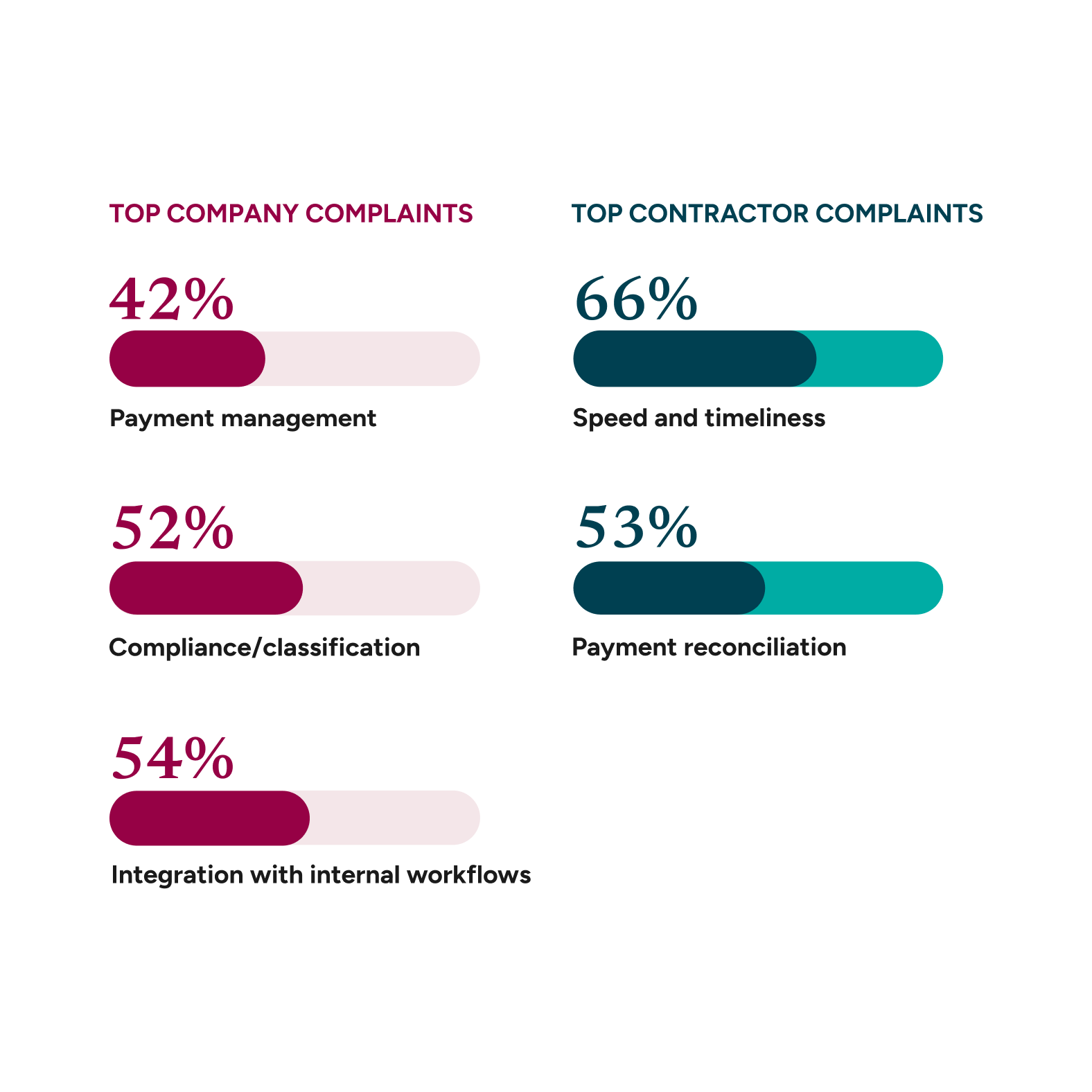
Speed and timeliness of payments is the #1 contractor complaint (66%), followed by payment-reconciliation delays (53%) and a lack of payment transparency (46%). On the company side, integration with internal workflows (54%) and compliance and classification (52%) top the list. That friction compounds at every stage of the contractor lifecycle.

Get the report
Get the full breakdown of how contractors are reshaping the workforce, where the operational burden is hiding, and what the highest-performing teams are doing differently. We’ll email you the report.
Inside the report
Benchmarks from 500+ Finance, HR, and Operations leaders on how contractors are hired, paid, and managed today.
84%
say contractors now do work once reserved for employees.
83% already treat contractors as core contributors.
66%
name payment speed as their #1 contractor complaint.
The top driver of contractor churn.
18%
are very satisfied with their current contractor process.
Even though 95% already juggle three or more tools.
The takeaway
Companies that win in a contractor-first world are the ones investing now in purpose-built infrastructure to support it.
Read our full Privacy Policy to learn more about your rights and our data retention practices.

Want more on the key findings from The Future of Flexible Work: Why the Contractor Experience Matters? Watch the on-demand recording.
Watch the recording