
3 Experts on Managing 1099 Behavioral Health Networks
How to Build, Manage, and Maintain Them
The classification, tax, sanctions, and telemarketing rules that matter when a contact center pays remote agents.
Five rules matter when a U.S. contact center or BPO pays agents as independent contractors: the IRS common-law factors for worker classification, Form 1099-NEC reporting, Form W-8BEN for foreign agents, OFAC sanctions, and the FTC Telemarketing Sales Rule's record rule for telemarketing staff, which names employees. For payments made in 2026, the IRS reporting threshold is $2,000, and a 1099-NEC generally goes to a payee who is not your employee and is paid that much for services in your business (IRS, Instructions for Forms 1099-MISC and 1099-NEC; Am I required to file a Form 1099?). Rules are as of October 2026.
Most examples below use Lee, a customer support agent who takes calls for your network from Memphis and is paid $3,500 in 2026.
The IRS groups the facts about a working relationship into behavioral, financial, and type of relationship, and no one factor stands alone. For example, in a contact center, behavioral facts can include who sets the scheduled shifts, who dictates call handling, and who grades quality scores. Financial facts can include who supplies the headset and softphone, whether pay is an hourly rate or a set fee for a client program, and whether expenses are reimbursed. Type of relationship facts include written contracts and whether the work is a key part of the business. The IRS adds that the whole relationship matters, including how far the center can direct and control the worker.
For remote work, the IRS says a person who performs services from a location other than an office you operate is your employee under the common-law rules if you can control what will be done and how, even if the worker can choose to work remotely (IRS, Independent contractor (self-employed) or employee?).
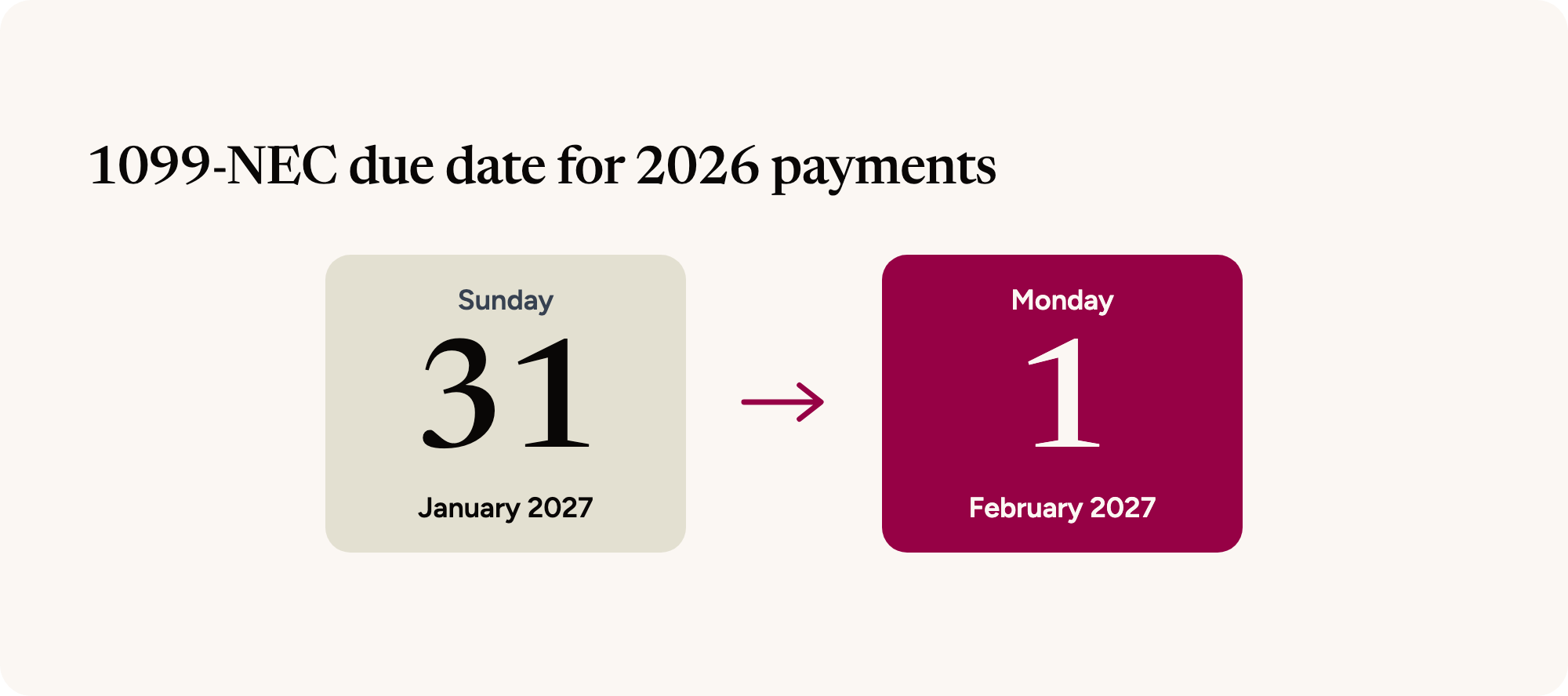
The calendar date for 2026 agent payments is January 31, 2027, and that day is a Sunday. The IRS pushes a due date that lands on a weekend or legal holiday to the next business day, which makes Lee's form and every other agent's due Monday, February 1, 2027 (IRS, Instructions for Forms 1099-MISC and 1099-NEC). For a center with a large roster of work-from-home agents, every information return it files counts toward the e-file limit: 10 or more, with all types of information returns counted together, must be filed electronically (IRS, Am I required to file a Form 1099?; Instructions for Forms 1099-MISC and 1099-NEC).
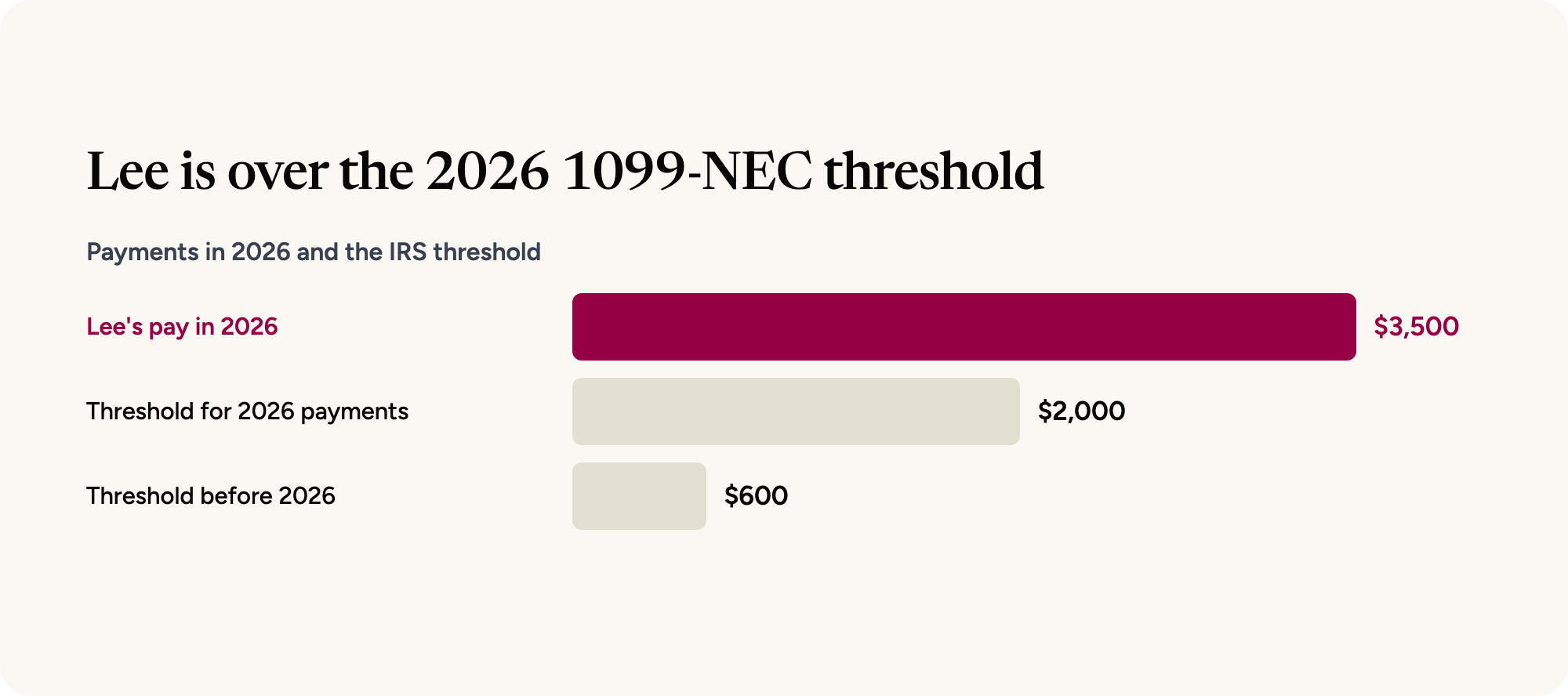
Lee's $3,500 in 2026 pay is above the $2,000 level that applies to payments made in 2026 for services by someone who is not your employee. The older $600 level governed payments made before 2026 (IRS, Am I required to file a Form 1099?).
Omni Interactions, a gig-based customer support provider with 10,000+ remote Gig Brand Ambassadors, worked with Wingspan to import historical data from two legacy systems for 2024 1099 processing with 100% of its 1099 tax data consolidated. For a roster of agents across client programs, Wingspan's tax compliance tools cover the 1099 cycle: forms are created, reconciled, filed, and delivered for the 1099-NEC, 1099-MISC, and 1099-K.
Generally not, when the agent is a foreign person who gives the payer a valid Form W-8. The IRS says foreign persons who provide a valid Form W-8 are exempt from backup withholding and Form 1099 reporting (IRS, Publication 515). A foreign individual establishes that status with Form W-8BEN, which generally stays in effect through the last day of the third succeeding calendar year after signing, unless a change in circumstances makes it incorrect (IRS, Instructions for Form W-8BEN). If a different agent, based in Manila, signed a W-8BEN in 2026, the form would generally be in effect through December 31, 2029.
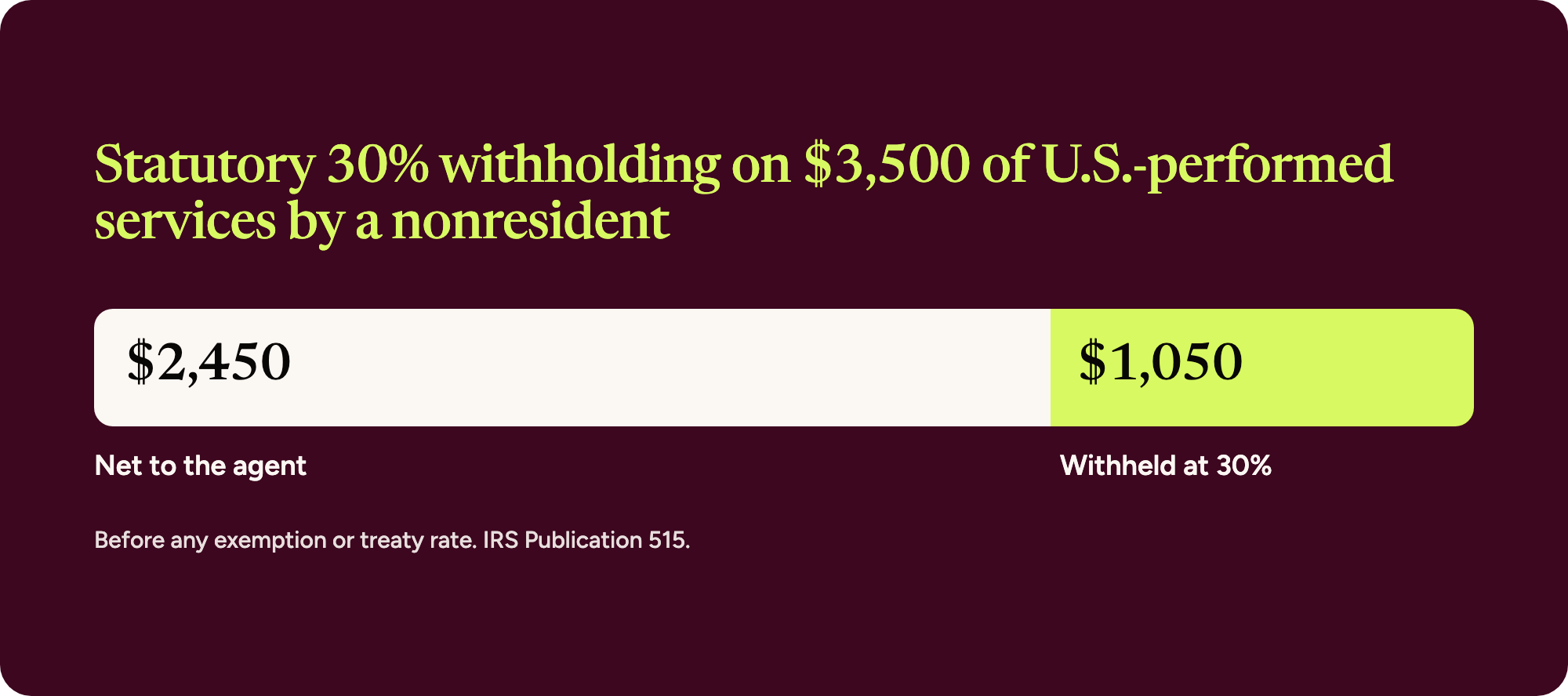
Where the work happens decides the source of the income, so pay for personal services done inside the United States is generally U.S. source income. You must generally withhold 30% on pay to a foreign individual who is a nonresident for U.S. tax purposes for those services, and payments subject to that withholding are reported on Form 1042-S (IRS, Publication 515). Suppose instead that the agent is a foreign individual who is a nonresident for U.S. tax purposes and takes calls from inside the U.S.: on $3,500, the statutory withholding would be $1,050, before any exemption or tax treaty rate.
BetterUp, a coaching network that pays roughly 4,000 coaches across 70+ countries, moved its network onto Wingspan with dedicated webinars: W-9 collection and IRS verification for U.S.-based coaches, and the W-8 flow for global coaches. Coaches outside the U.S. were automatically excluded from its 1099-NEC flow. Wingspan's onboarding for international contractors asks for bank information, tax details, eSignatures, and the W-8 forms that apply.
Yes. OFAC sanctions apply to U.S. persons, which includes a U.S. contact center, and which prohibitions apply depends on the sanctions program. The group that must comply covers all U.S. citizens and permanent residents regardless of where they are located, all individuals and entities within the United States, and all U.S. incorporated entities and their foreign branches (U.S. Treasury OFAC, Who must comply with OFAC sanctions?). Many programs require blocking the property of specific individuals and entities. Others prohibit certain trade or financial transactions unless OFAC authorizes them or a statute exempts them (OFAC, What kinds of prohibitions does OFAC impose?).
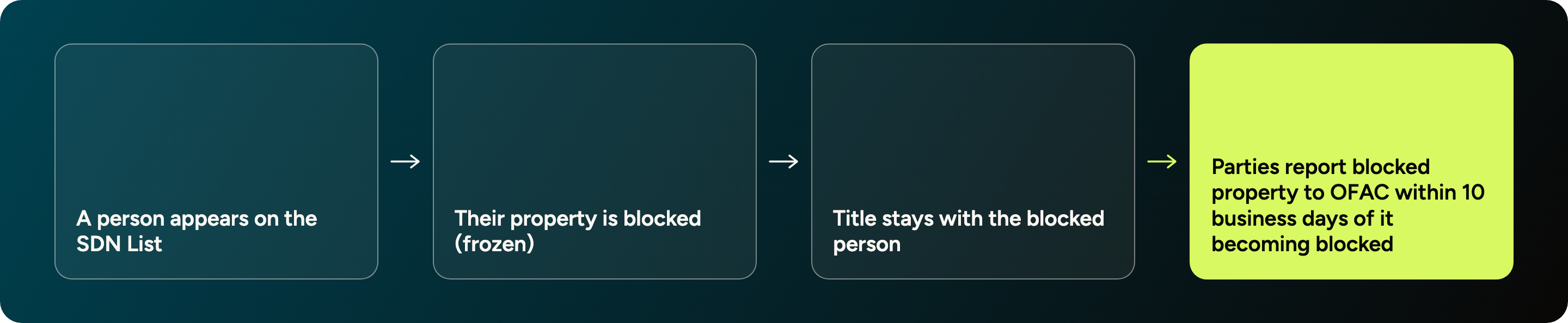
Blocked property is frozen, and title stays with the blocked person. Blocked persons include those on OFAC's SDN List, and parties must report blocked property to OFAC within 10 business days of the property becoming blocked (OFAC, What does OFAC mean when it refers to "blocked" property?).
A seller or telemarketer covered by the rule must keep records of its telemarketing activities, generally for 5 years from the date the record is produced. For each current or former employee directly involved in telephone sales or solicitations, the records include the name, any fictitious name used, the last known home address and telephone number, and the job titles (FTC, 16 CFR 310.5). Section 310.5 refers to employees in this record and does not mention independent contractors.
The FTC's rule defines a telemarketer as any person who, in connection with telemarketing, initiates or receives telephone calls to or from a customer or donor. Telemarketing is a plan, program, or campaign to induce the purchase of goods or services or a charitable contribution by telephone, and it involves more than one interstate call (FTC, 16 CFR 310.2). Section 310.6(b)(5) exempts some calls a customer initiates in response to an advertisement, with exceptions that include calls that involve upselling (16 CFR 310.6).
They do not say how a particular agent's queue duties, shift setup, and client program should be classified, and a foreign agent's tax treatment turns on the agent's U.S. tax status, where the calls are taken, and any treaty. The post doesn't cover state tax or call-recording laws, payment card industry standards, an agent's home-country taxes, or payroll for employees.
Bring contact center agent onboarding, cross-border pay, and 1099s together
See how BPOs and contact centers onboard agents, pay across borders, and file 1099s in Wingspan.
How to Build, Manage, and Maintain Them
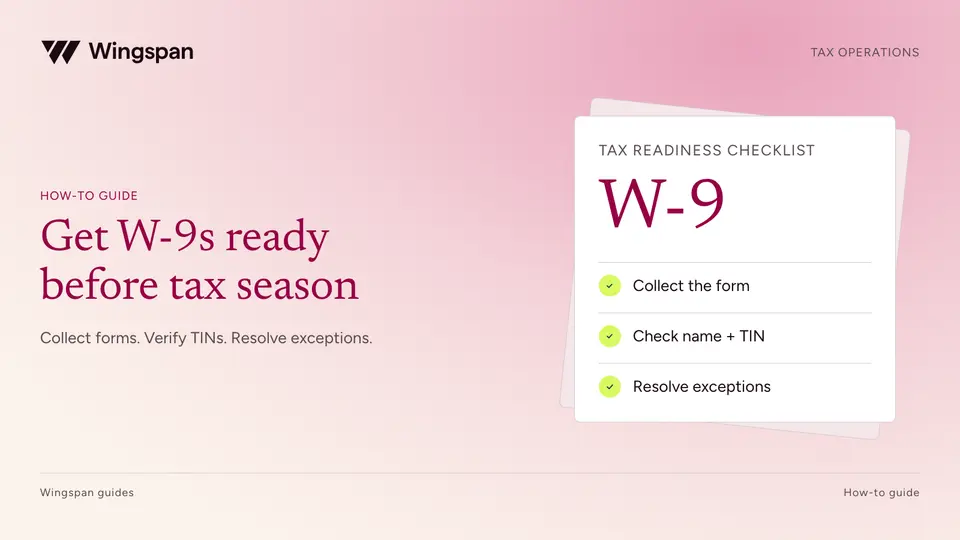
Build a W-9 collection and TIN matching workflow with clear owners, secure updates, mismatch resolution, and records ready for 1099 review.
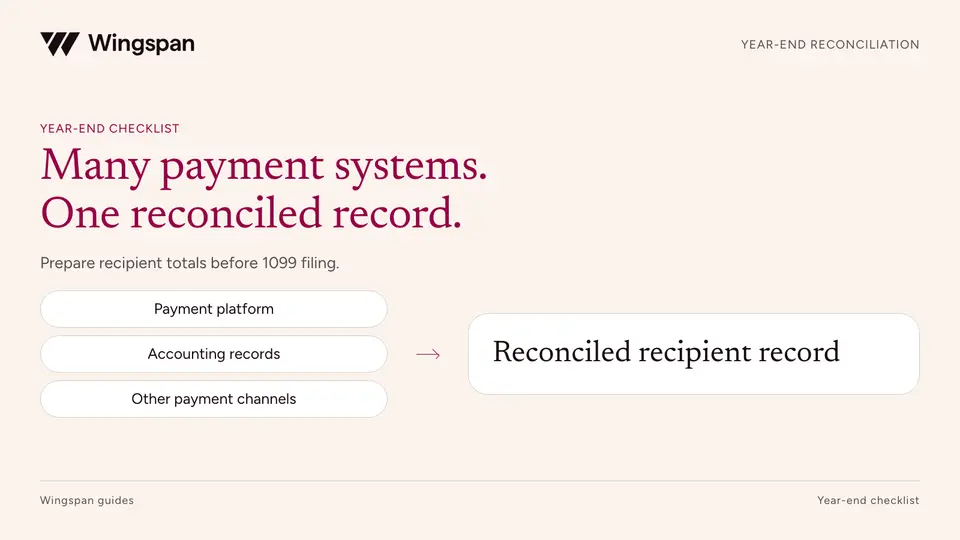
Reconcile contractor payments across platforms, AP, banks, and legacy systems with source registers, recipient mapping, and a reviewable bridge.