
3 Experts on Managing 1099 Behavioral Health Networks
How to Build, Manage, and Maintain Them
The disclosure, tax-reporting, and foreign-payee rules that matter when an influencer agency pays creators.
Six rules matter when a U.S. brand or influencer agency pays creators as independent contractors: FTC disclosure of paid relationships, the IRS classification factors, 1099-NEC reporting, the line between 1099-NEC and 1099-K, backup withholding, and withholding on U.S. source pay to foreign creators who are nonresidents for U.S. tax purposes. A U.S. creator paid $2,000 or more for services in 2026, other than by payment card or third-party network, generally gets a 1099-NEC from the business that paid (IRS, Instructions for Forms 1099-MISC and 1099-NEC). Rules are as of October 2026.
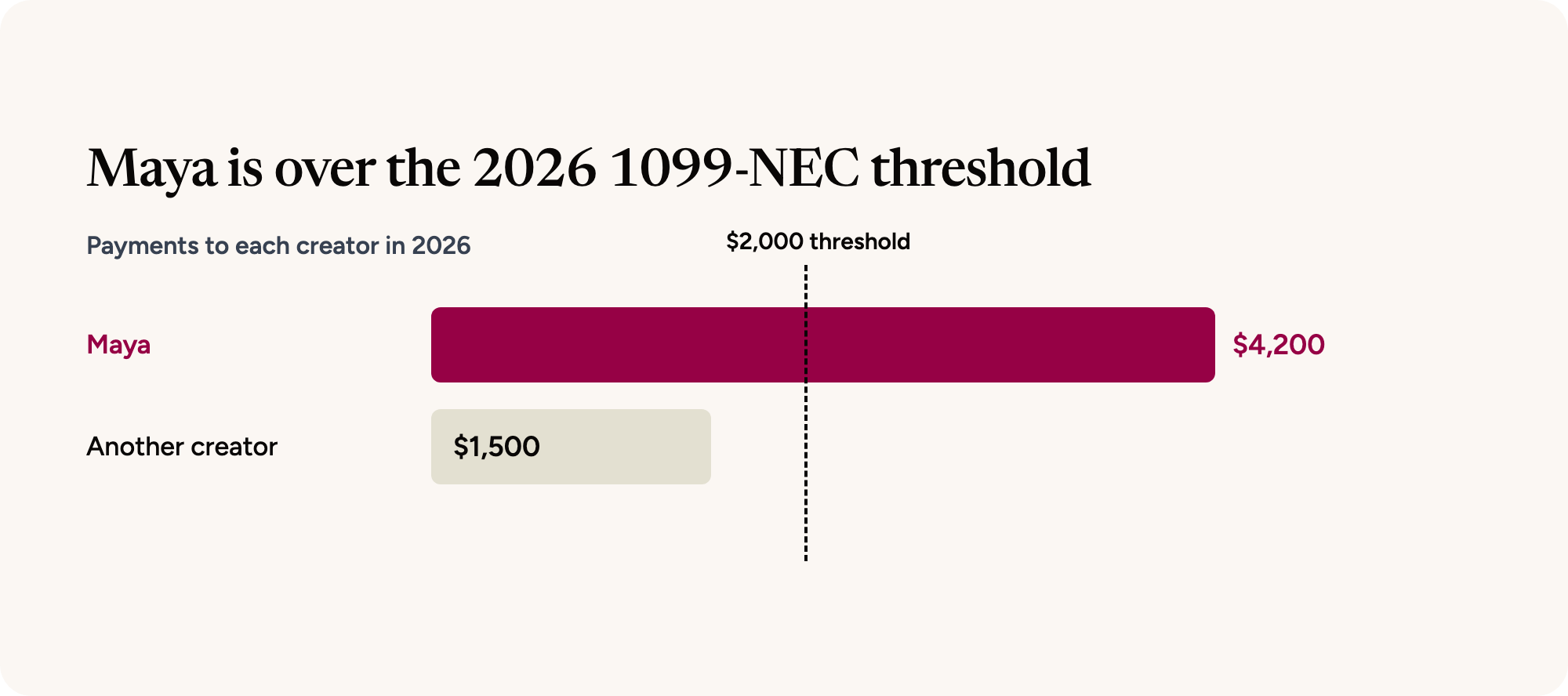
Most examples below use Maya, a food creator in Ohio who makes videos for your brand and is paid $4,200 in 2026.
An endorser has to clearly and conspicuously disclose a connection to the brand that might materially affect the weight or credibility of the endorsement and that the audience would not reasonably expect. Connections can include monetary payment and free or discounted products, even if the advertiser does not require an endorsement in return (FTC, Endorsement Guides, 16 CFR 255.5). If the brand sends Maya a product along with the fee, both can be connections to disclose.
The duty reaches the paying side too. Advertisers are subject to liability for failing to disclose unexpected material connections, and an advertiser may be liable for a deceptive endorsement even when the endorser is not liable. Agencies and similar intermediaries may be liable when they hire and direct endorsers who fail to disclose (FTC, Endorsement Guides, 16 CFR 255.1).
A signed creator agreement is one fact among many. The IRS groups the facts under behavioral control, financial control, and type of relationship, and no single factor decides the determination. Behavioral facts include whether the brand has the right to direct what the creator makes and how. Financial facts look at the business aspects of the creator's work: who provides tools and supplies such as camera gear, how the creator is paid, and whether expenses are reimbursed. The brand's use of a written contract or employee type benefits belongs to type of relationship, as does whether the creator's work is a key aspect of the brand's business and the relationship will continue. In the IRS's terms, the keys are the full relationship and how far the brand may direct and control the creator (IRS, Independent contractor (self-employed) or employee?).
Maya's $4,200 in sponsored posts clears the 2026 line, which is $2,000 or more paid to one payee for services in the year. Pay made before 2026 crossed the line at $600 instead (IRS, Am I required to file a Form 1099?). A creator paid $1,500 in fees falls below that line, though backup withholding applied to the pay would still require a 1099-NEC, whatever the amount (IRS, Instructions for Forms 1099-MISC and 1099-NEC).
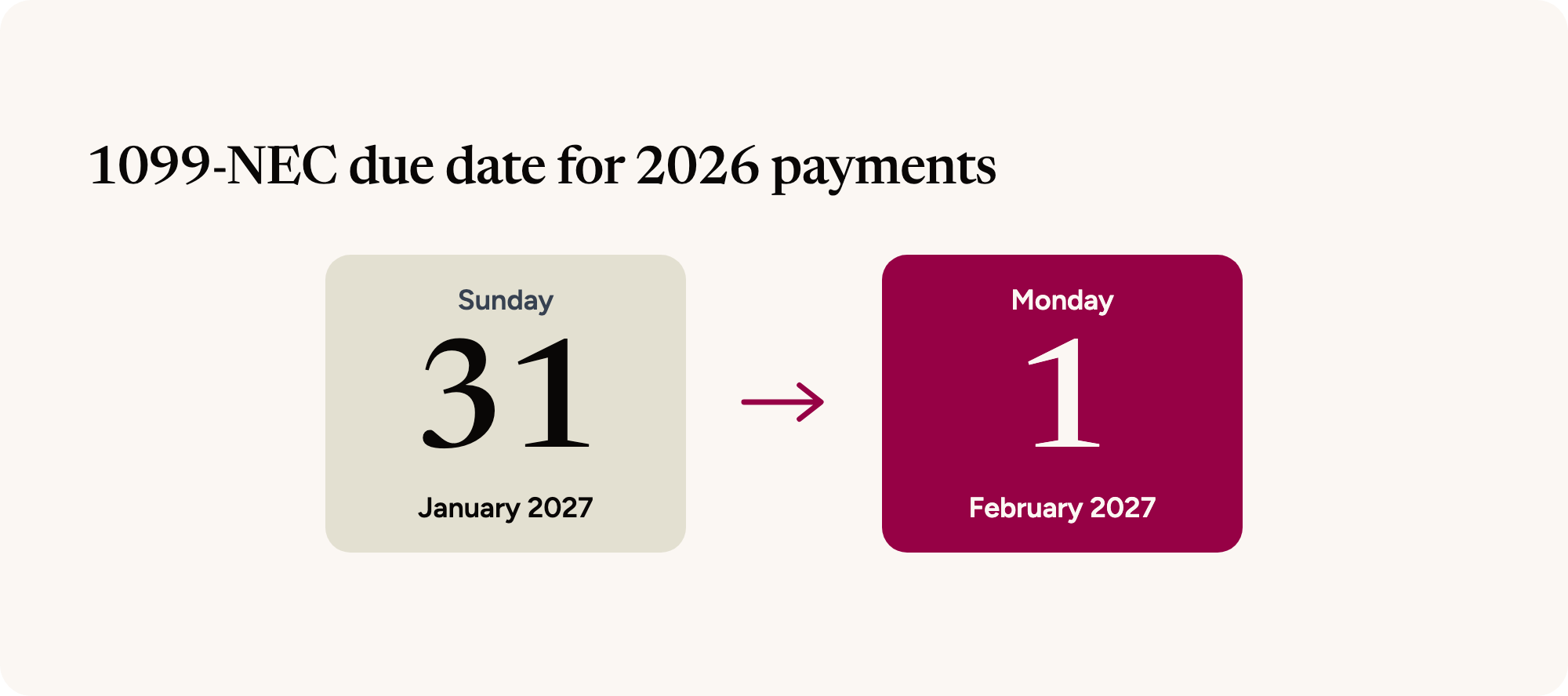
Maya's copy and the IRS copy are both due on January 31 after the payment year. Weekends and legal holidays move the deadline to the following business day (IRS, Instructions for Forms 1099-MISC and 1099-NEC). January 31, 2027 falls on a Sunday, so the 1099-NEC for Maya's 2026 campaign payments is due Monday, February 1, 2027.
An agency that files 10 or more information returns has to file them electronically, and the IRS adds every return type together to reach that count (IRS, Am I required to file a Form 1099?; Instructions for Forms 1099-MISC and 1099-NEC). From the payments you run, Wingspan tracks reportable payments year to date for each creator and payer. Fizz Social says Wingspan automatically generates 1099-NEC forms from verified W-9 data and handles e-filing for the students it engages as contractors.
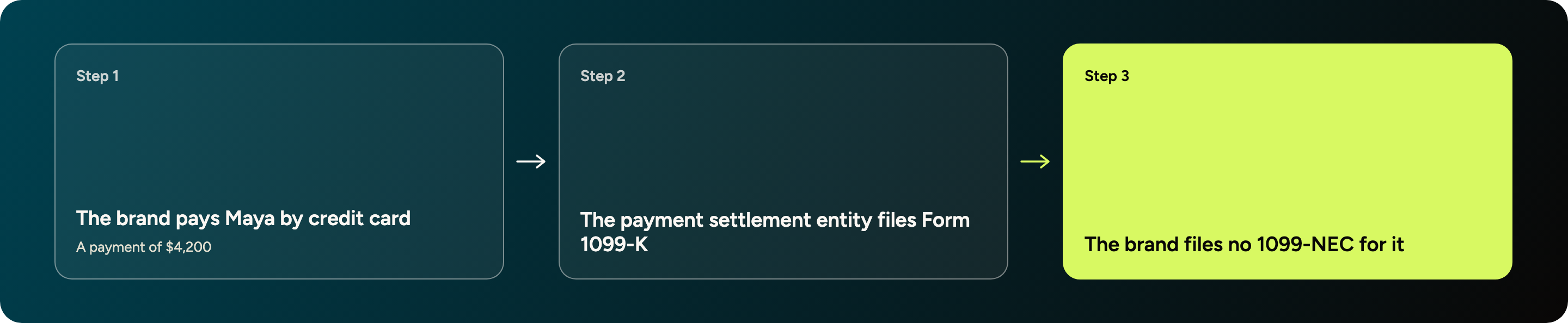
Payments made with a credit card or payment card, and third-party network transactions, are not subject to reporting on Form 1099-NEC; the payment settlement entity reports them on Form 1099-K when the 1099-K rules are met (IRS, Instructions for Forms 1099-MISC and 1099-NEC). For third-party network transactions, the organization that settles them reports only if payments to a payee exceed $20,000 and the number of transactions exceeds 200 (IRS, Instructions for Form 1099-K). If the brand pays Maya's $4,200 by credit card, the payment is reportable on a 1099-K by the payment settlement entity, and the brand files no 1099-NEC for it.
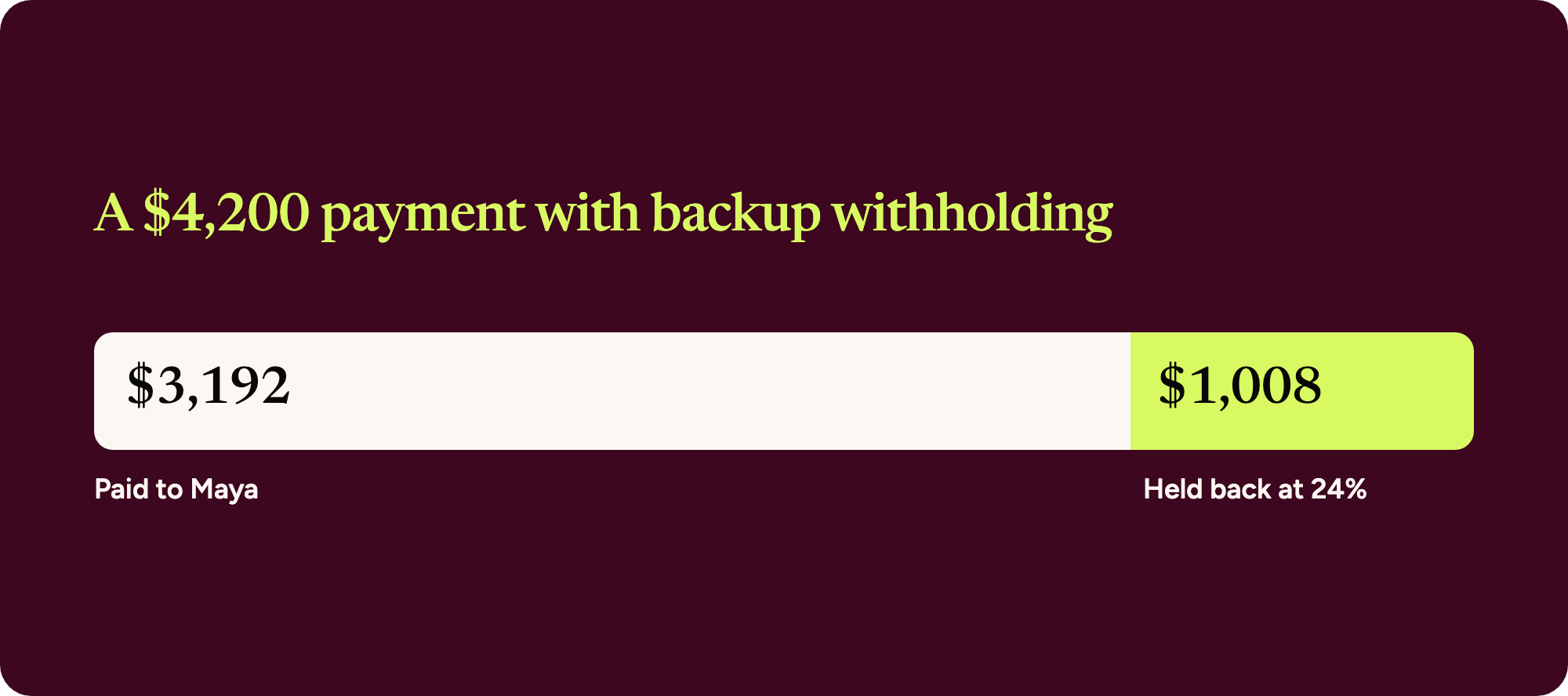
Reportable payments to a U.S. creator are subject to 24% withholding in either of two situations the IRS names: the creator never gave the payer a taxpayer identification number (TIN) in the required manner, or the IRS notified the payer that the TIN on file is incorrect and the creator did not certify it as the notice requires (IRS, Forms and associated taxes for independent contractors). A $4,200 payment to Maya would have $1,008 held back if backup withholding applied.
Per Wingspan's tax compliance page, TINs are verified automatically and mismatches are flagged before a contractor gets paid. On Wingspan, Fizz Social has automated TIN verification and W-9 collection for its contractors.
For U.S. source nonemployee compensation paid to a nonresident foreign individual for U.S. tax purposes, the payer reports it on Form 1042-S for any amount and withholds 30%, or a lower tax treaty rate if one applies (IRS, Federal income tax withholding and reporting on other kinds of U.S. source income). On a $1,000 payment, 30% is $300. A creator can claim a treaty rate on pay for independent personal services with Form 8233. A foreign individual gives the payer Form W-8BEN to establish that they are not a U.S. person, but the IRS says not to use W-8BEN to claim an exemption from withholding on that kind of pay. The IRS says failing to provide a W-8BEN when requested may lead to withholding at 30% or at the backup withholding rate (IRS, Instructions for Form W-8BEN). If a payer cannot tell whether a payee is a foreign or U.S. person, the presumption rules require treating the payee as a non-exempt U.S. person and deducting backup withholding (IRS, Forms and associated taxes for independent contractors).
Per Wingspan's international payments page, onboarding collects applicable W-8 forms, plus tax details, bank information, and eSignatures.
Whether one creator is a contractor, and whether one creator's income is U.S. source, turns on facts about that creator's own brand deals that this post does not cover. State tax rules, tax treaty rates by country, platform terms, and payroll for employees are also outside its scope.
One system for creator onboarding and payouts
See how influencer agencies, UGC platforms, and creator networks collect W-9s, pay creators, and file 1099s in Wingspan.
How to Build, Manage, and Maintain Them
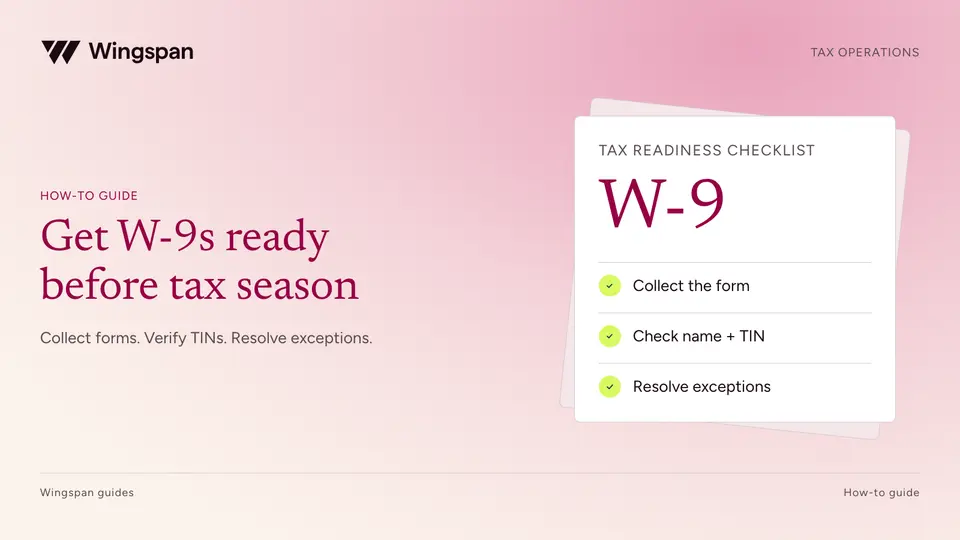
Build a W-9 collection and TIN matching workflow with clear owners, secure updates, mismatch resolution, and records ready for 1099 review.
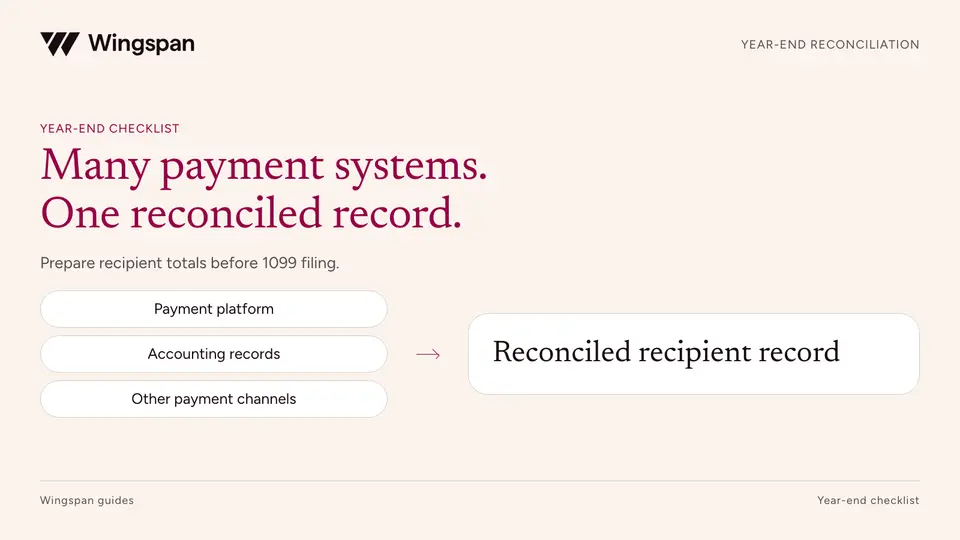
Reconcile contractor payments across platforms, AP, banks, and legacy systems with source registers, recipient mapping, and a reviewable bridge.