
3 Experts on Managing 1099 Behavioral Health Networks
How to Build, Manage, and Maintain Them
The licensure, tax, and exclusion-list rules that come up when a telehealth network pays contract clinicians.

Six rules matter when a U.S. telehealth network pays clinicians as independent contractors: state licensure, the IRS test for worker classification, Form 1099-NEC reporting, electronic filing, backup withholding, and the federal exclusion list, which OIG describes in terms of hires and employees. For payments made in 2026, you file a 1099-NEC for each person you pay $2,000 or more for services during the year, a line that a clinician's pay from your network can cross (IRS, Instructions for Forms 1099-MISC and 1099-NEC). Rules are as of October 2026.
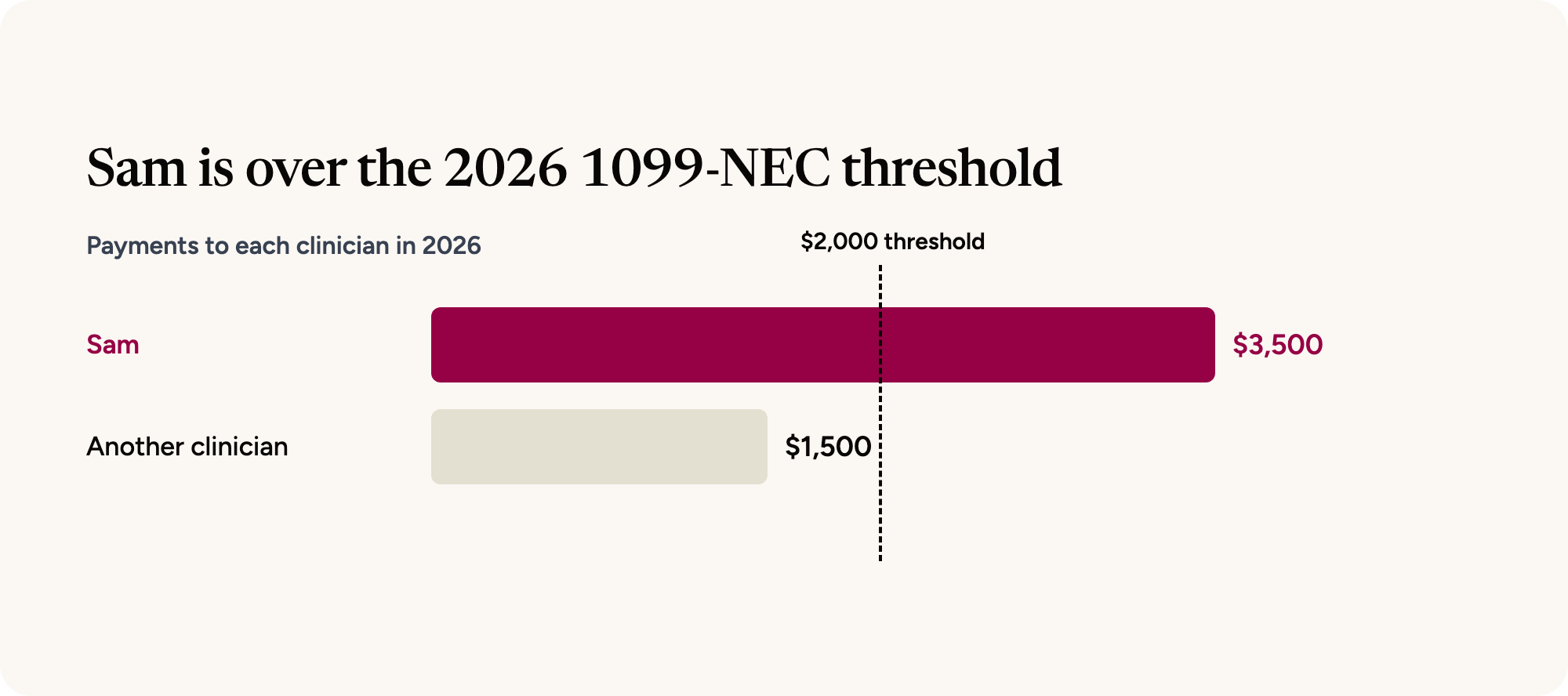
Most examples below use Sam, a nurse practitioner who sees patients for your network from Colorado and is paid $3,500 in 2026.
HHS says health professionals must meet the licensure requirements of the state where they are located and be licensed or legally permitted to practice in the state where the patient is located (HHS, Getting started with licensure). If Sam sees a patient who is in Utah, Sam has to meet Colorado's requirements and be licensed or legally permitted to practice in Utah.
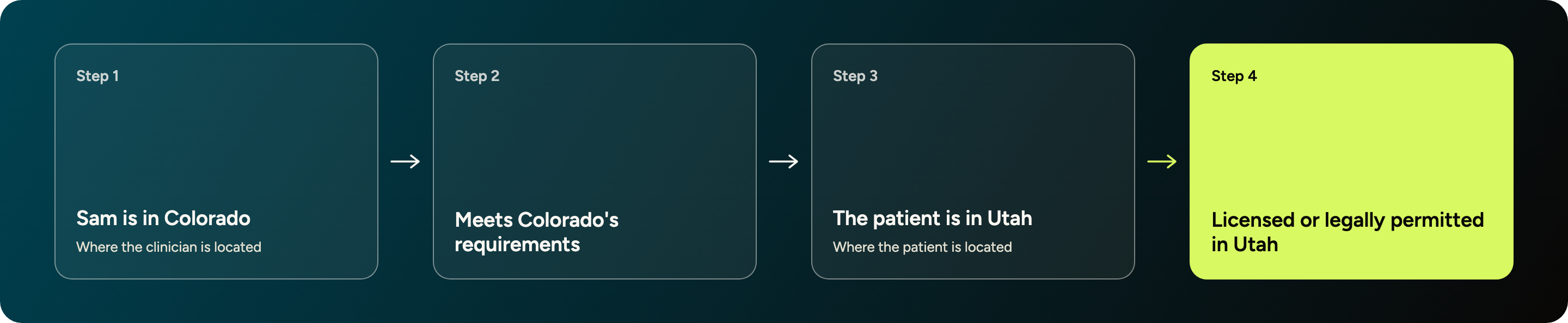
HHS names five ways a provider can practice across state lines: a full license, temporary practice laws, licensure reciprocity, a licensure compact, and telehealth registration where a state offers it. HHS says the ability to deliver care across state lines varies based on state regulations (HHS, Licensing across state lines).
Meru Health, a telehealth company with providers in 26 states, can store its signed agreements and varying licensing requirements in Wingspan. Wingspan's onboarding for telehealth networks collects state clinical license and DEA registration documents. If a requirement the network has assigned to a provider expires and the provider doesn't renew it, the provider can't be paid until they complete it again.
Three categories of facts matter to the IRS: behavioral, financial, and type of relationship. Behavioral facts show whether the network has the right to direct what Sam does and how Sam does it. Financial facts show whether the network controls the business side of Sam's work, such as who provides tools and supplies, whether expenses are reimbursed, and how Sam is paid. Type of relationship takes in a written contract and employee-type benefits. No one factor stands alone, and the IRS says the keys are to look at the entire relationship between the network and the clinician and the extent of the network's right to direct and control the clinician (IRS, Independent contractor or employee?).
Sam's $3,500 in patient-session pay clears the 1099-NEC line for payments made in 2026, which is $2,000 paid to a person for services during the year. For payments made before 2026, that line was $600 (IRS, Am I required to file a Form 1099?). Most payments to corporations are exempt, but the IRS instructions say that exemption does not apply to payments for medical or health care services provided by corporations, including professional corporations. Form 1099-MISC, box 6, covers payments of $2,000 or more made in the course of your business to a physician or other provider of medical or health care services. Form 1099-MISC is due to the recipient by January 31 and to the IRS by February 28 on paper or March 31 if filed electronically, with the same weekend and holiday rule (IRS, Instructions for Forms 1099-MISC and 1099-NEC). A clinician paid $1,500 in 2026 is under the line, unless you withheld federal income tax from that pay under the backup withholding rules below, in which case a 1099-NEC is required regardless of the amount (IRS, Instructions for Forms 1099-MISC and 1099-NEC).
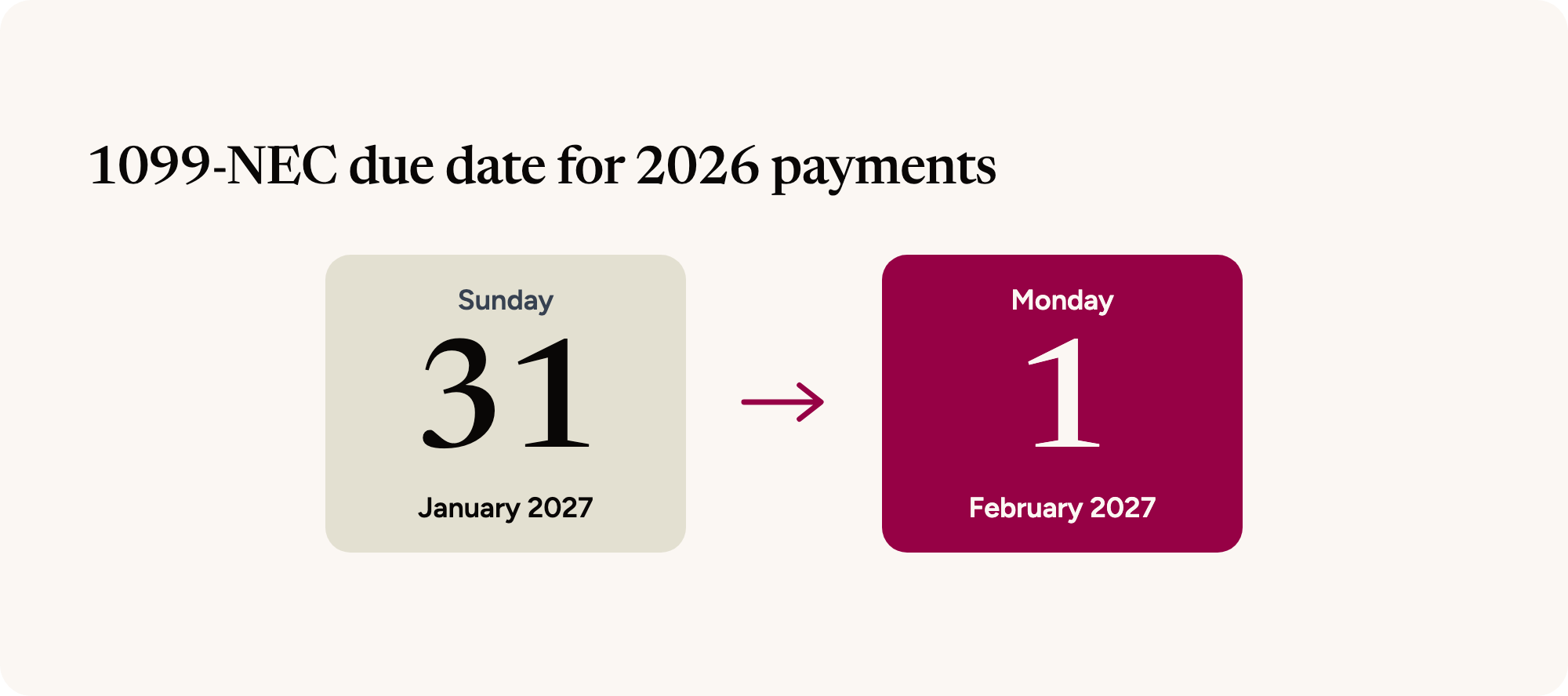
Sam's form, which covers a year of session pay, goes to Sam and to the IRS by January 31. A weekend or legal holiday on that date pushes the due date to the next business day (IRS, Instructions for Forms 1099-MISC and 1099-NEC). January 31, 2027 is a Sunday, which puts the deadline for 2026 payments at Monday, February 1, 2027.
Electronic filing is required once you file 10 or more information returns, and the IRS adds up every type of information return to reach that count (IRS, Am I required to file a Form 1099?; Instructions for Forms 1099-MISC and 1099-NEC). A network that files returns for a few hundred clinicians is far beyond ten.
For telehealth networks, Wingspan automates the 1099 work: creation, reconciliation, filing, and delivery of 1099-NEC, 1099-MISC, and 1099-K forms.
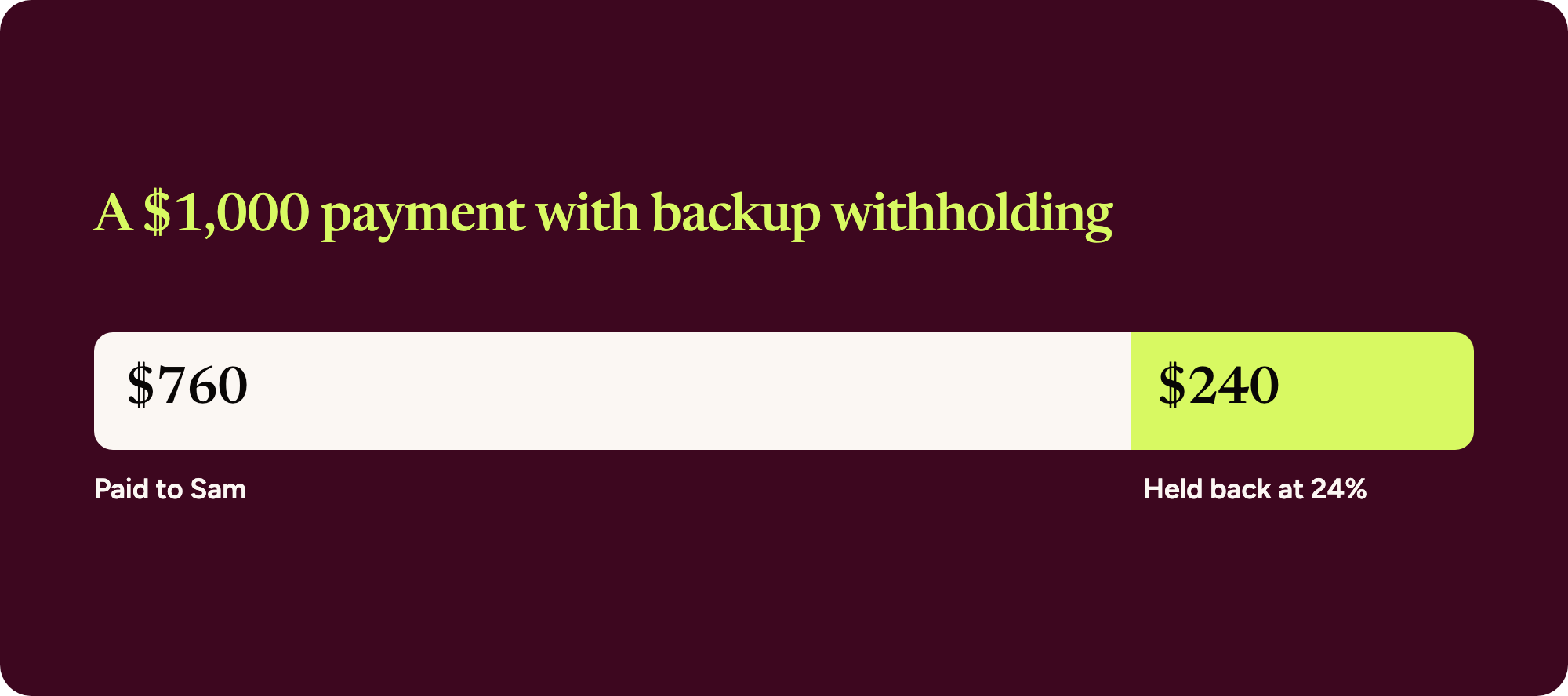
Backup withholding is 24% held back from reportable payments. For a U.S. contractor, the IRS lists two situations: the clinician has not given your network a taxpayer identification number (TIN) in the manner required, or the IRS tells you the TIN is incorrect and the clinician does not certify it as the notice requires (IRS, Forms and associated taxes for independent contractors). If backup withholding applied to Sam, $240 of a $1,000 session payment would be held back.
Wingspan collects W-9 information in onboarding, verifies TINs automatically, and flags mismatches before a contractor gets paid.
OIG says anyone who hires an individual or entity on its List of Excluded Individuals/Entities (LEIE) may be subject to civil monetary penalties. OIG also says health care entities should routinely check the list to ensure that new hires and current employees are not on it (HHS OIG, Exclusions). The page speaks of hires and employees and doesn't name independent contractors.
Whether a clinician is a contractor depends on the facts of their work with your network, and where a clinician can see patients depends on each state's rules. This post covers federal tax rules, HHS licensure guidance, and the OIG exclusion list. It doesn't cover state tax rules, payer enrollment, or payroll for employees.
Onboard and pay your telehealth providers in Wingspan
See how telehealth networks onboard providers, collect W-9s and licenses, and file 1099s in Wingspan.
How to Build, Manage, and Maintain Them

Build a W-9 collection and TIN matching workflow with clear owners, secure updates, mismatch resolution, and records ready for 1099 review.
Reconcile contractor payments across platforms, AP, banks, and legacy systems with source registers, recipient mapping, and a reviewable bridge.