
Webinar
The Future of Flexible Work: Why the Contractor Experience Matters
We surveyed 500+ finance, HR, and Ops leaders to learn how they are hiring, managing, and preparing for professional and gig workers in the next 3 years.
How to Build an HR Platform for a Mixed Workforce
I recently spoke at HR Tech 2025 about how the way we work is fundamentally changing—and why HR platforms need to catch up.
During the talk, “Contractors Aren’t an Afterthought: Building HR Platforms for the New Workforce Reality,” I covered why more workers are choosing independent paths, how that shift impacts HR teams, and what platforms need to build to keep up.
You can watch the video of the talk or read the full recap below.
Right now, we’re in the middle of a massive shift in the way we work today.
50 years ago, the average worker spent the majority of their career at one company, as a salaried, full-time employee. Today, the median job tenure according to the Bureau of Labor Statistics is only 3.9 years. And one third of the workforce—that’s 60 million Americans—did some kind of freelancing, consulting, or contract-based work in the last year. That’s $1.4 trillion dollars paid to independent contractors in 2024 alone.
This isn’t just a trend. Or just about gig workers and side hustles for folks hoping to pick up extra cash by driving for Uber. There has been a 70% growth in spending on mission-critical “professional staffing” from 2018—2022. By 2035, we expect 50% of the workforce to have done at least some kind of contract work as part of their career. That includes software developers, marketers, graphic designers, accountants—skilled professionals building small businesses instead of clocking in and out every day for a single company.
That means HR professionals will have completely different requirements than they have in the past.
When we think about the composition of your organization in the coming years, you’ll find more and more independent contractors as a key part of your story.
But HR and finance professionals are stuck working with technology designed with either vendors or full-time employees in mind. You have two options for these systems:
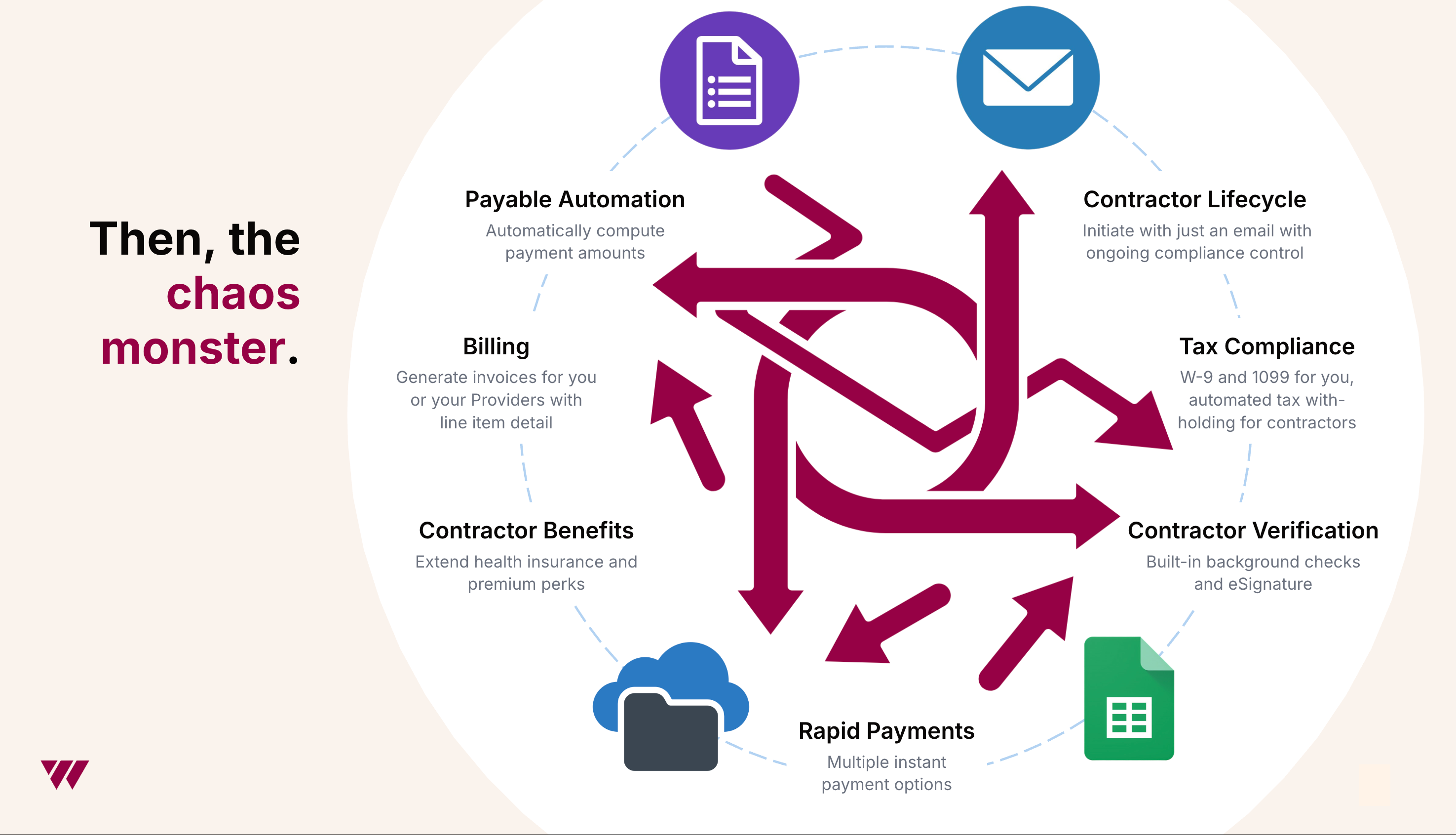
Now instead of having one place to get it done, you’re left stitching together bits and pieces of these two systems, scattering documents, payment records, and insurance information across systems, spreadsheets, or Google forms. Reporting? Laughable.
Not only does this make your job difficult, it’s also putting your team at risk. An audit with a patched-together system like this won’t end well for anyone.
What HR professionals really need is a third option: A system designed to handle your contractors: A Purpose-built contractor management platform.
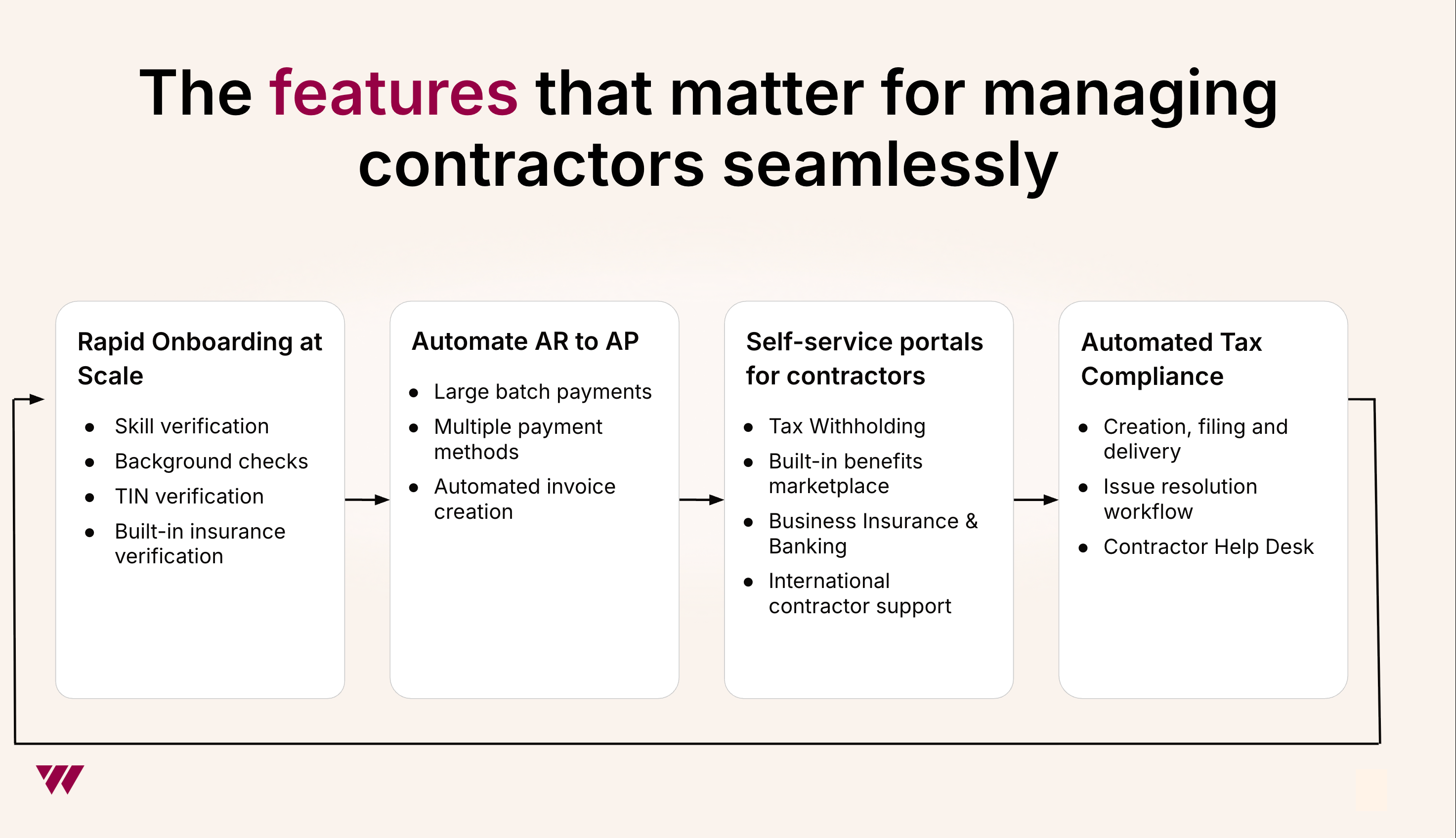
Dedicated Contractor Management software includes features like:
You need a dedicated contractor management system to be able to effectively onboard, pay, and manage these contractors—so they can focus on the value they’re adding to your company instead of chasing paperwork issues or wondering when their next invoice will get paid.
The workforce has already changed. Your systems need to catch up.
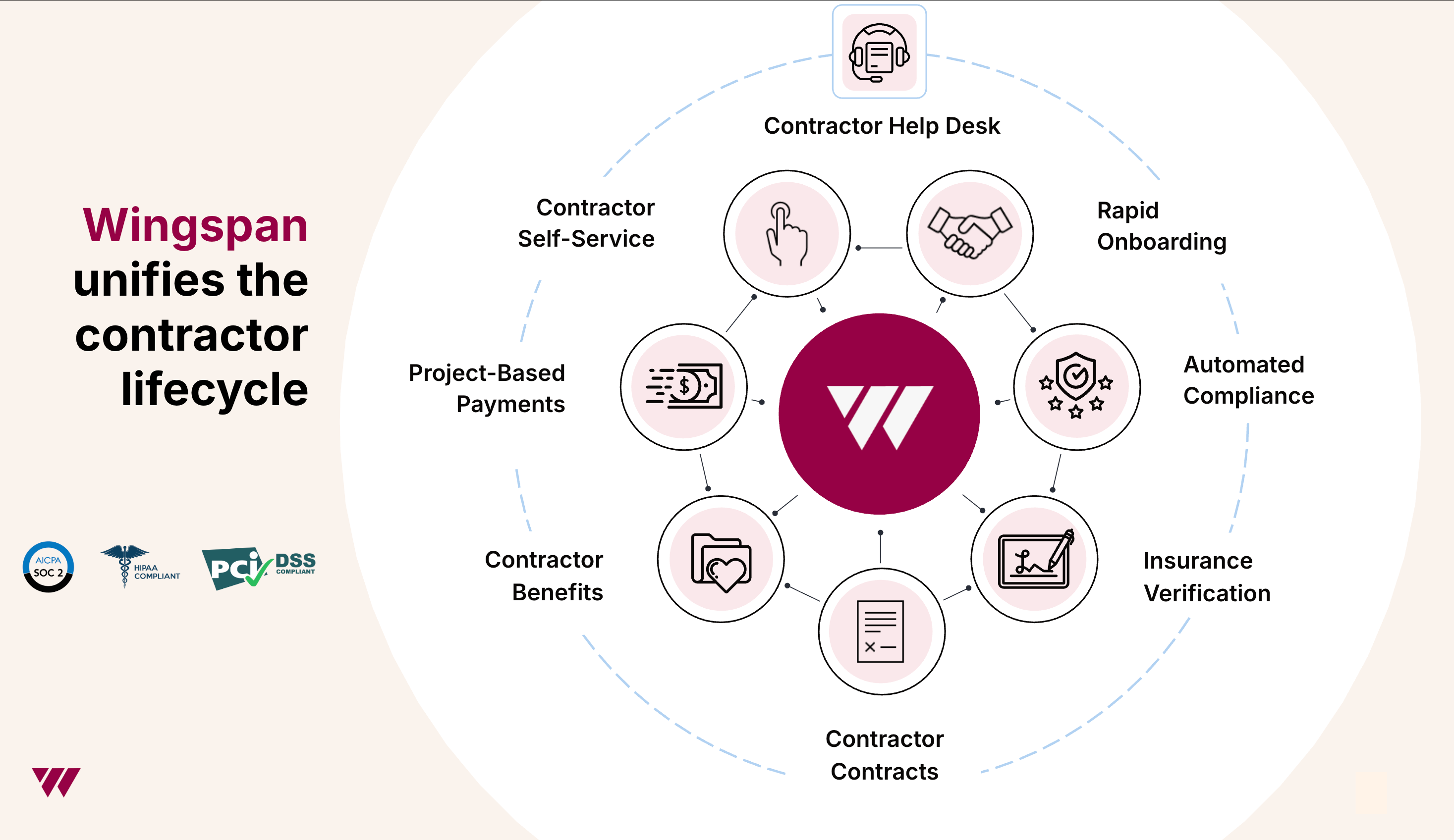
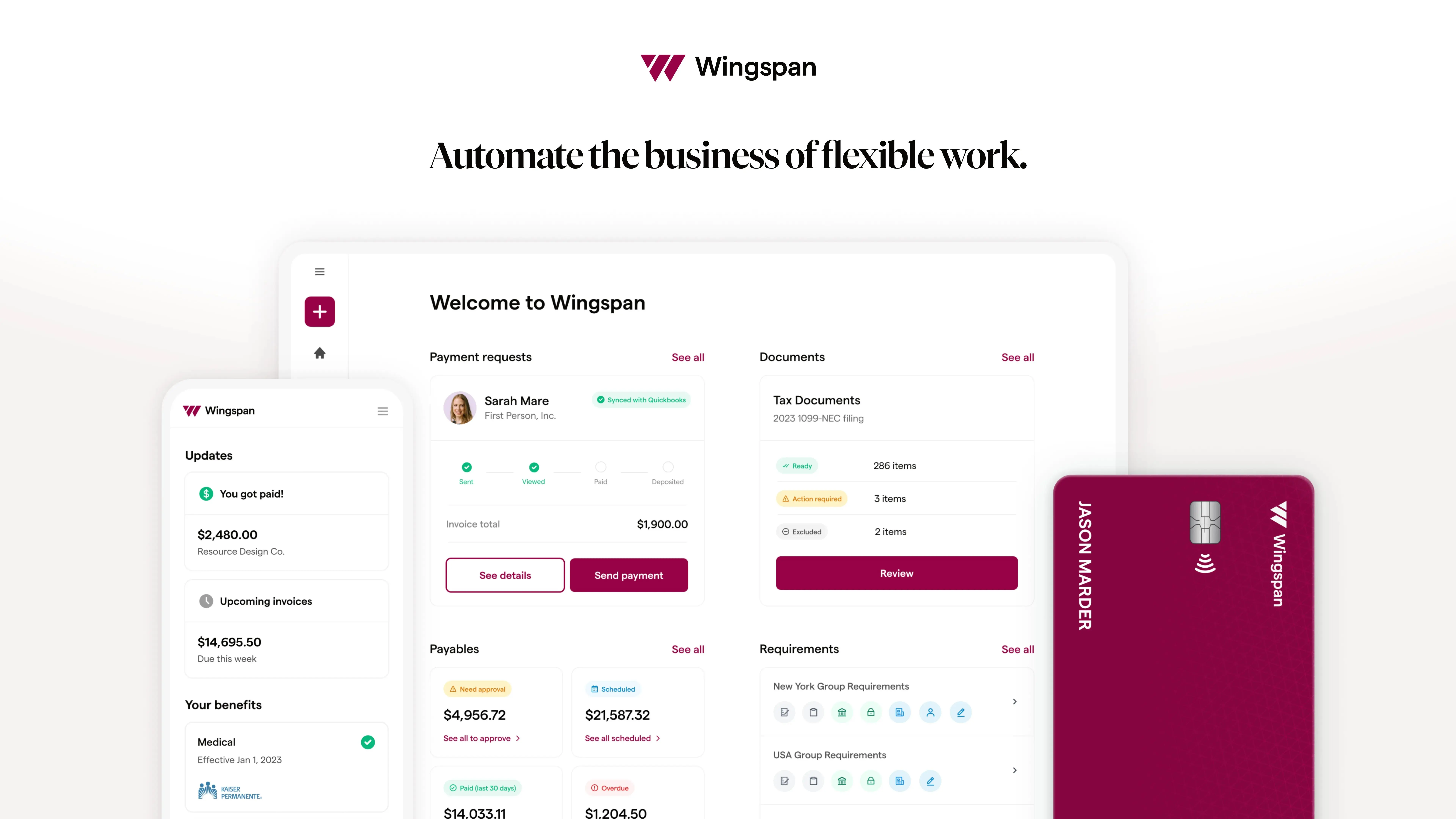
With Wingspan, your HR team can onboard, manage, and pay contractors with a dedicated contractor management system:
The companies that get contractor management right? They unlock access to the best talent so they can scale faster without needing to put in long hours or tear their hair out managing it all.
This is your competitive advantage moment.
Learn more about how Wingspan can support your contractors>
And if you’re an HR platform, let’s work together >
We surveyed 500+ finance, HR, and Ops leaders to learn how they are hiring, managing, and preparing for professional and gig workers in the next 3 years.

Webinar Recap: How BELAY Overhauled Onboarding from 27-11 days
Date: January 28, 2026 Time: 2PM EST The contractor workforce isn’t slowing down - scrutiny is rising, and internal expectations are rising even faster. Join Wingspan for a forward-looking conversation on what’s changing in 2026 and how finance, compliance, and ops teams can stay ahead. In this session, we’ll cover: How flexible work models are evolving in 2026, and what that means operationally What regulatory, compliance, and worker classification scrutiny looks like this year How finance and ops teams are being asked to do more with contractor-heavy workforces Why legacy AP and payroll systems are showing cracks (and where teams feel it first) More businesses are relying on flexible labor, but finance, compliance, and ops teams are absorbing the complexity. This webinar is designed to help you anticipate what’s next and leave with practical ways to prepare, without adding more manual work to your team. This webinar is for you if you’re responsible for: Contractor onboarding, W-9 collection, and tax workflows Worker classification risk and audit readiness Payment operations for 1099s (at scale, across teams/systems) Reducing manual workload, support tickets, and “spreadsheet compliance”

How to Build, Manage, and Maintain Them