
3 Experts on Managing 1099 Behavioral Health Networks
How to Build, Manage, and Maintain Them
Get the inside scoop for new 1099 requirements and how world-class finance teams are using automation to simplify and expedite the 1099 filing season.
Finance, accounting, and HR teams are under increasing pressure as the January deadline for 1099-NEC filing approaches. For companies that run on independent contractors, January is often a race against the clock to create, file, and deliver 1099-NEC forms on time.
Failure to issue Form 1099-NEC by January 31 can result in significant costs, with the IRS imposing penalties ranging from $60 to $310 per form in 2024. Intentional disregard of 1099 filing is even more serious, with a minimum penalty of $630 per form.1 The IRS also charges penalties for each incorrect payee statement regardless of whether it was or wasn’t submitted on time.
These fees, alongside the administrative chaos of manual filing, aren’t sustainable for businesses with hundreds or thousands of contractors. We spend a lot of time talking to finance and operations leaders from companies that rely on 1099 contractors and have gleaned a ton of insights on what successful 1099 filing looks like.
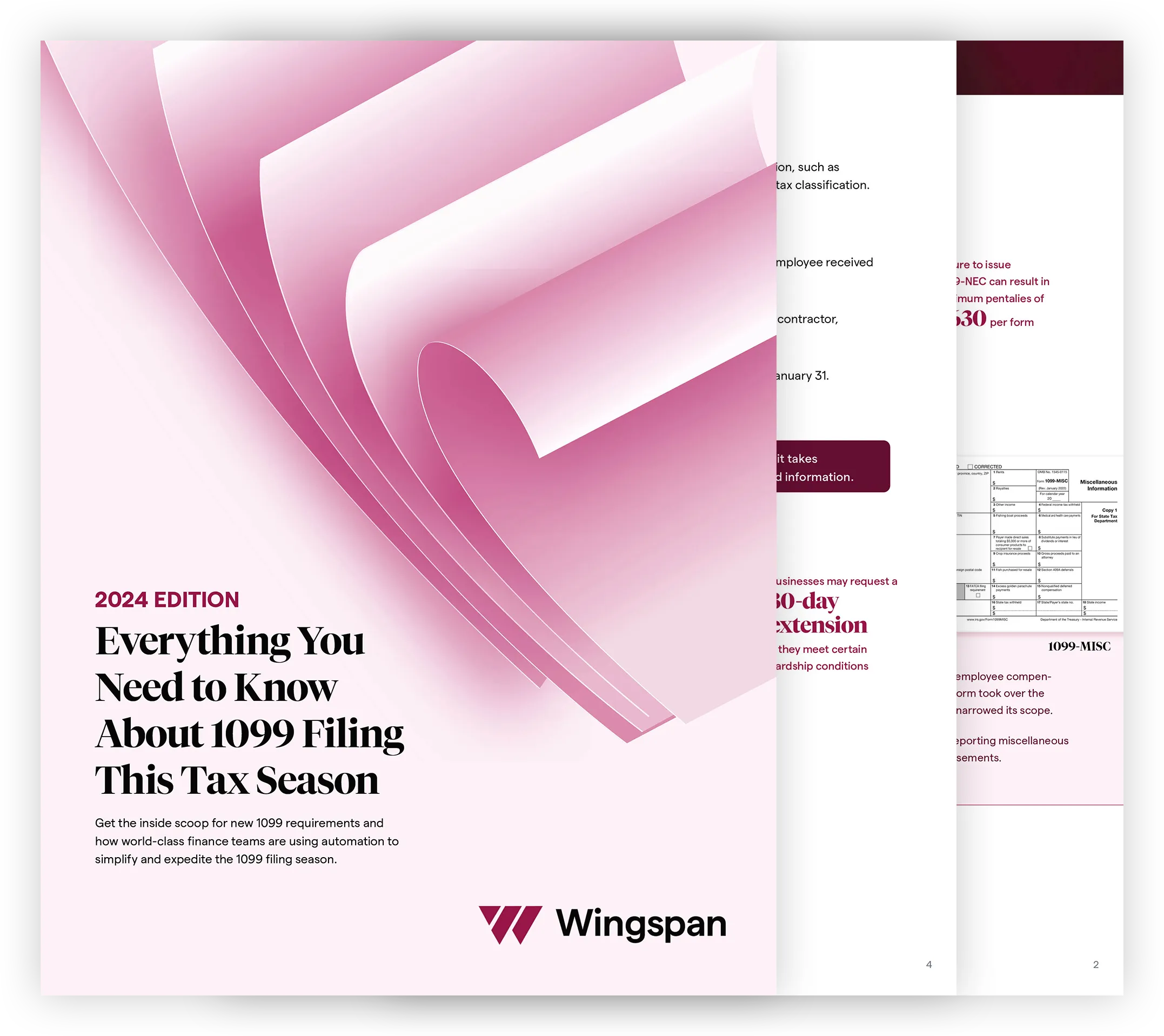
We've compiled those learnings and much more in a brand new report: Everything You Need To Know About 1099 Filing This Tax Season.
Form 1099-NEC is used to report compensation to a non-employee who received at least $600 from the business within the tax year.
You’re required to file the 1099-NEC if you’ve been paying for services from:
Generally, you don’t have to issue 1099-NEC forms for:
However, even if your situation aligns with these criteria, we strongly advise you to consult a lawyer to ensure compliance.
Businesses must file 1099-NEC forms for each independent contractor by January 31 of the following year to avoid information return penalties. While 1099 forms can be submitted both online and on paper, the IRS encourages payers to switch to electronic filing—new regulations require payers to e-file 10 or more information returns beginning in 2024.
How to handle the 1099-NEC filing process:
From reaching out to contractors to manually verifying and entering the data, it takes a significant amount of manual effort to gather and accurately file the required information.
The IRS highlights that there’s no automatic extension to file a 1099-NEC. However, a business may request a 30-day filing extension under one of the following hardship conditions:
In case of any of these events, the extension may be granted upon submitting Form 8809 on paper or e-filing it before the filing due date.
The 1099 filing season is one of the most demanding times for finance teams. Without a streamlined and automated process in place, finance leaders find themselves grappling with a series of formidable challenges from December through February.
The multitude of manual tasks will devour your team members’ time. One finance and operations leader told us they have an employee who spends half of her time in January sending –and fixing– 1099s to contractors. This is valuable time that could be spent on other critical tasks like year end close and financial reporting.
Because manual tasks like tracking TIN changes, handling entity changes, and contractor communications consume so much time, it increases the risk of missing the IRS’s deadline. Filing by January 31 is quite the feat if you’re manually pulling data into spreadsheets and creating, validating, and correcting forms for thousands of contractors.
To read the rest of the guide, request your copy of Everything You Need To Know About 1099 Filing This Tax Season.
How to Build, Manage, and Maintain Them

The hidden costs of manual W-9 collection and last-minute TIN validation errors: and how to eliminate both

How to eliminate weeks of manual reconciliation and ensure seamless January filing