

3 Experts on Managing 1099 Behavioral Health Networks
How to Build, Manage, and Maintain Them
Streamline Tax Compliance for Claims Adjusters: Simplify Your 1099 Process This Season
In the new year, claims companies have their eye on extreme weather. This is the season of blizzards, power outages, high winds, and burst pipes in basements—and with a dynamic, unpredictable business, you never know how busy the month will be.
On top of handling an influx of claims after the holiday break, everyone has to drop what they’re doing to navigate a confusing storm of tax compliance work (and it’s not even April!)
That’s because the IRS requires all 1099 forms to be completed and sent to contractors by January 31. Now, it’s a race for accounting and finance teams to file 1099-NEC forms on time and correctly.
One of our most frequently asked questions is whether or not you need to provide a 1099 form for your independent adjusters. If you’ve paid a contractor more than $600, either directly or indirectly, then you need a 1099 form. That means any independent adjuster that has helped you respond to disasters big and small needs a 1099 form.
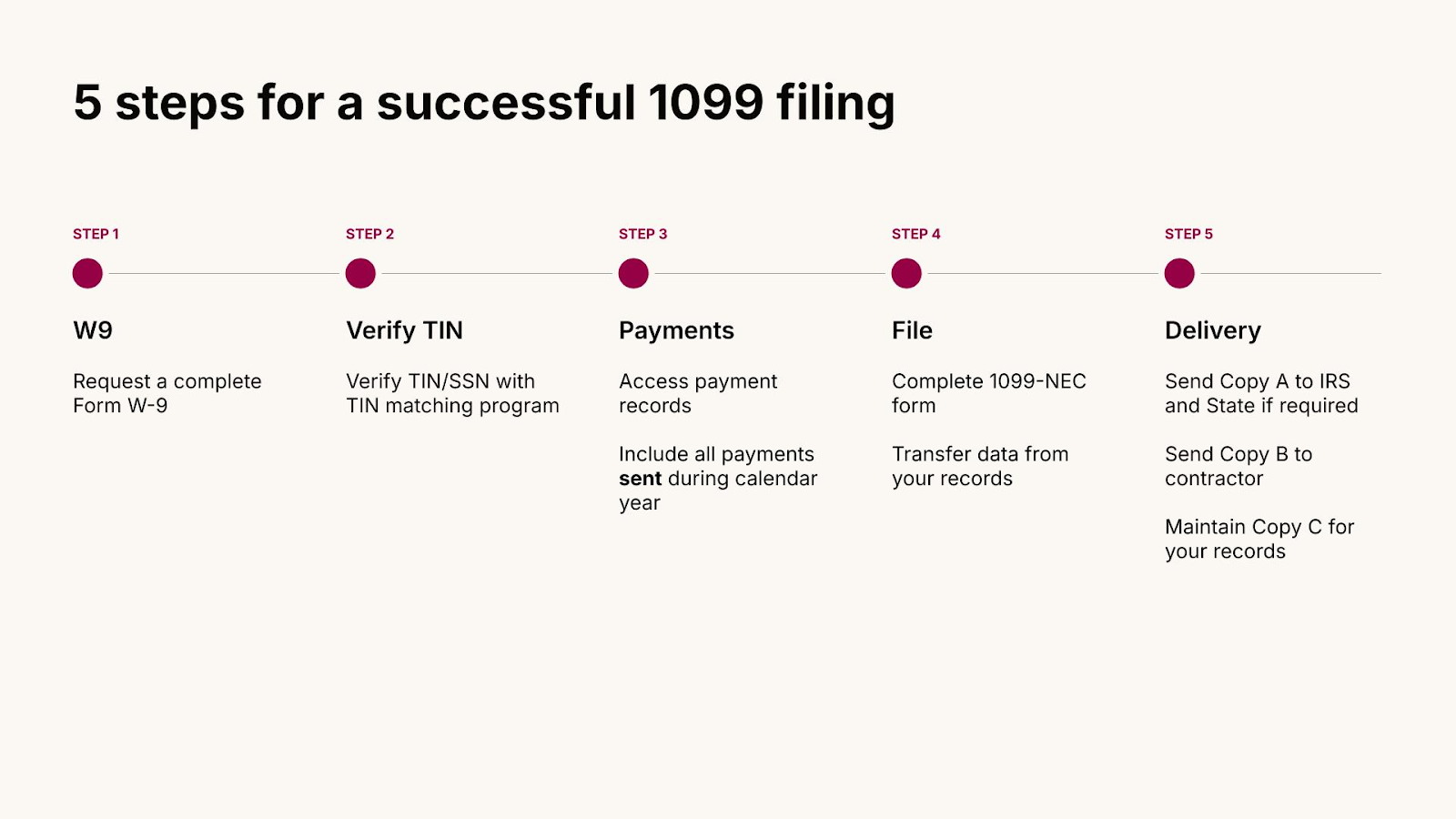
A 1099 process takes several steps and requires verification from your independent adjuster to ensure all the details are correct. Here’s what that looks like:
This process seems simple on paper, but in reality, most accounting teams have to pull this information from multiple systems or spreadsheets—and that’s only if all of the information from the adjuster is correct in the first place.
Whether it’s misread handwriting or a typo that could happen to anyone, making a mistake with these forms can cost you from $60 to $330 per form in 2025, according to the IRS. That means you need to have accurate, up-to-date information from every single adjuster and need a complete picture of their payment information.
Claims company AFIRM was tired of this cycle of errors and penalties every January using their standard payroll tools. “[We hope to eliminate errors and subsequent IRS penalties with regards to 1099 tax filings that we have experienced over the past several years due to ADP field limitations,” says Ryan Parker, VP of Finance. “It would also mitigate human data entry error that is compounded given the number of independent contractor payments and profiles that we process and create.”
For CRU GROUP, managing more than 1,000 contract-based claims adjusters across two countries led to plenty of headaches as they experienced rapid growth as a company. "Our ability to be nimble and responsive is what sets us apart and the efficiency of our back office in many cases, determines how well we’re able to do that,” says U.S. COO Brett Peiffer.
They went from a manual, spreadsheet-based process to onboard and pay their claims adjusters to consolidate its onboarding, payment and compliance processes onto the Wingspan platform, resulting in massive efficiencies in its back office and a better experience for adjusters. Doing so provided a 25% reduction in administrative HR/IT tasks for the team, equating to more than 50 hours of work. That way, their accounting team could focus on strategy and execution.
“Everything is all in one system. It’s a game-changer,” says Brett. “It’s saving our back-office team a ton of time and manual toil.”
1099 filing doesn’t have to be complicated. We’ve pulled together a detailed guide to the entire process for claims companies so you can get your 1099s filed quickly and on time. Download our free guide to 1099 filing > Everything You Need To Know About 1099 Filing This Tax Season
Instead of manually gathering all of this information thousands of times across multiple geographies for your claims adjusters, automation makes tax season easy. Wingspan’s purpose-built tooling offers one place for you to manage the entire contract-based claims adjuster lifecycle.
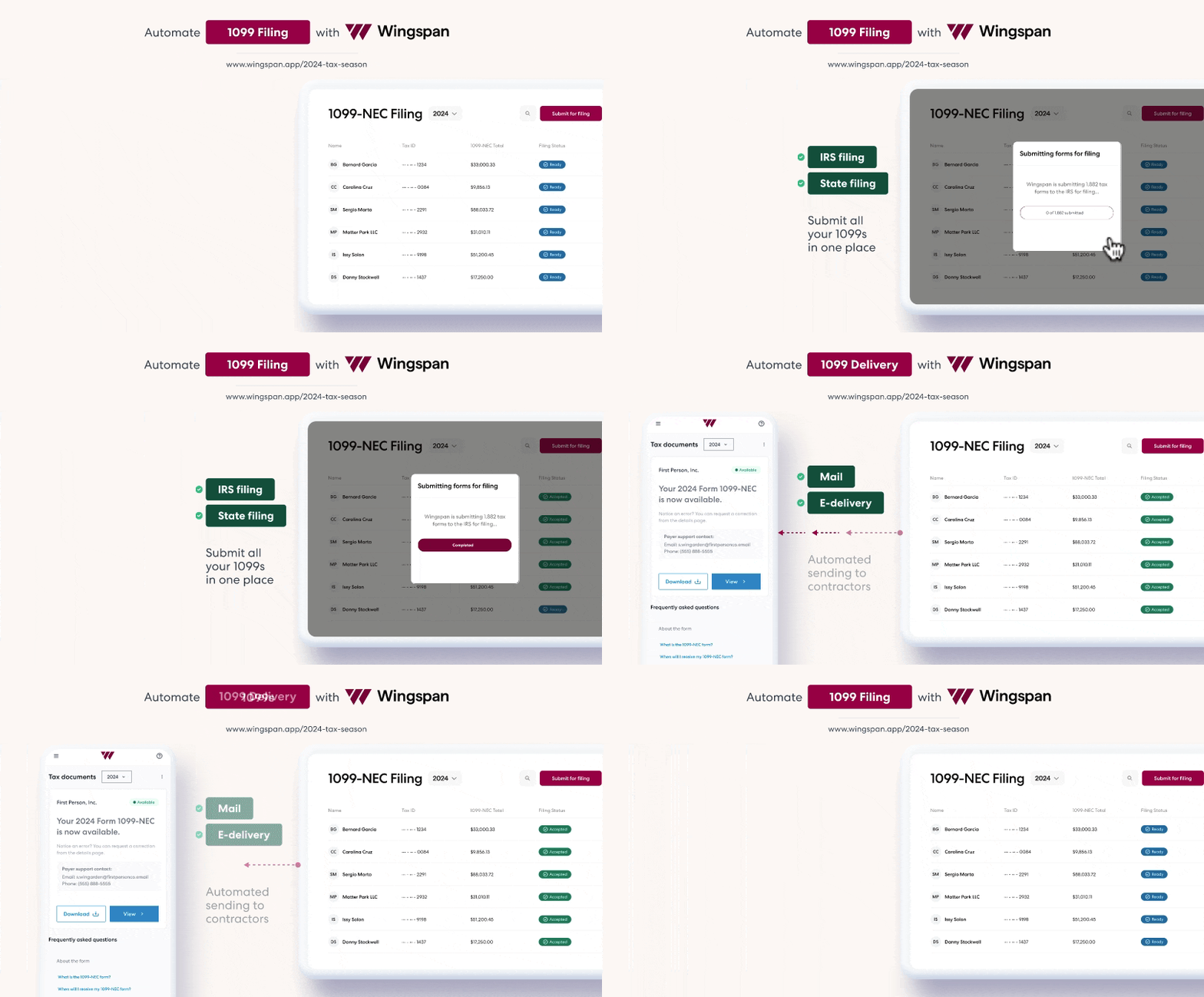
With Wingspan, you can:
See how Wingspan makes tax season easier for claims companies >
How to Build, Manage, and Maintain Them

The hidden costs of manual W-9 collection and last-minute TIN validation errors: and how to eliminate both

How to eliminate weeks of manual reconciliation and ensure seamless January filing